Post-frame construction is an engineered building method that uses widely spaced wood posts and roof trusses to carry loads into the ground. For a property owner, that means a strong structural system that can create broad, useful space without rows of interior supports. It is why the method works so well for barns, shops, garages, arenas, and commercial buildings.
Design your post-frame building in 3D and submit it for a project-specific quote.
If you are asking what is post frame construction, you may also be deciding whether it fits your land, budget, and plans. This guide explains the system in plain English, compares it with other building methods, and shows what Oregon and Washington owners should consider. For broader planning guidance, read Locke Buildings’ complete Pole Buildings 101 guide.
What is post frame construction?
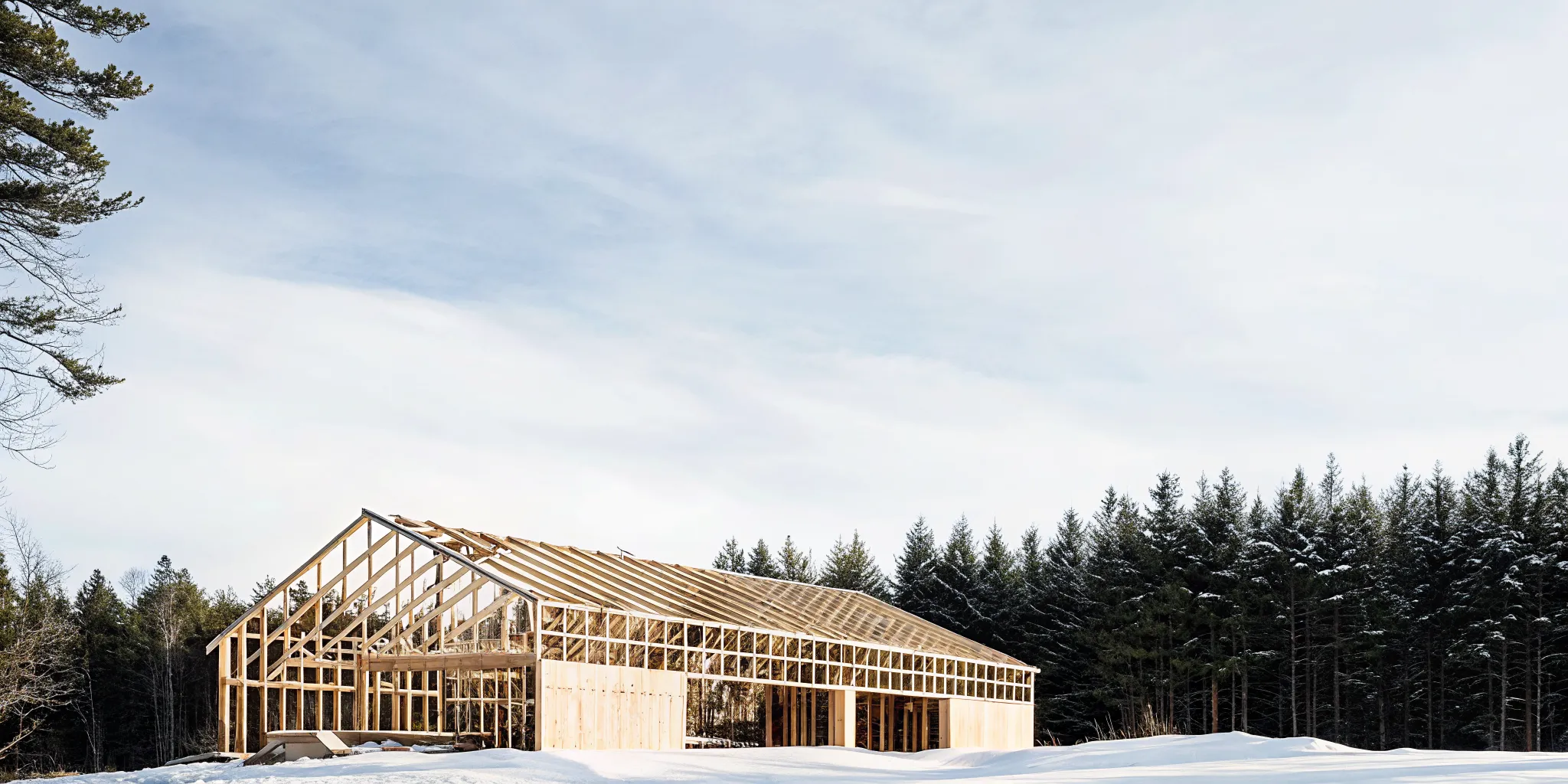
Post-frame construction gets its name from its structural frame. Large vertical posts support engineered roof trusses. Horizontal members connect the posts and give the roof and wall panels a secure place to attach. Together, these parts create a strong structural system with fewer interior supports.
The main structural parts
A post-frame building starts with columns, which may be solid-sawn wood or laminated members selected for the project. The columns are set in the ground or attached to engineered concrete supports. The right approach depends on the site, building design, local code, and engineer’s plan.
- Posts or columns carry the main loads from the roof and walls.
- Roof trusses span between columns and shape the roof.
- Girts run across the walls and support exterior cladding.
- Purlins run across the roof and support roofing panels.
- Bracing helps the frame resist wind and other side forces.
How the load path works
Every building needs a safe path for weight and weather forces to reach the ground. In post-frame construction, roof loads move through the trusses and into the posts. The posts then transfer those loads into engineered footings or foundation supports. Wall panels and bracing also help the completed system resist side forces.
This is why post-frame is more than a row of poles with metal siding. A sound building must be designed as one connected system. Post size, truss design, connection details, bracing, footings, openings, and local loads all matter. An engineer or qualified building team matches those parts to the planned use and site.
Why the interior can stay open
Because the primary frame carries loads at wider intervals, many post-frame plans need fewer load-bearing interior walls. That can create wide, open areas for equipment, vehicles, stalls, storage, work bays, or retail space. Owners can also plan large doors and flexible interior layouts when those features are included in the structural design.
How post-frame differs from stick-frame and steel buildings
Post-frame, stick-frame, and steel-frame methods can all produce useful, code-compliant buildings. The best choice depends on the building’s size, use, finish level, site, and local rules. The key difference is how each system carries loads.
| Feature | Post-frame | Stick-frame | Steel-frame |
|---|---|---|---|
| Main support | Widely spaced wood posts and trusses | Closely spaced wood studs and joists | Steel columns and beams |
| Interior layout | Often supports wide open areas | May use more load-bearing walls | Can support very wide spans |
| Foundation approach | Engineered posts, piers, or other supports | Often a continuous foundation | Engineered foundation matched to frame |
| Common uses | Barns, shops, garages, arenas, commercial spaces | Homes and smaller finished buildings | Large commercial and industrial projects |
Post-frame versus stick-frame
Stick-frame construction uses many smaller studs set close together. Those framed walls support the floors and roof, often over a continuous foundation. This method is common for houses and gives trades a familiar wall cavity for wiring, plumbing, and insulation.
Post-frame uses larger structural members placed farther apart. That can reduce the number of framing pieces and create more open space. It may also simplify the shell for a large shop or agricultural building. Yet the project still needs careful planning for insulation, interior finishes, utilities, and moisture control.
Post-frame versus steel-frame
A steel-frame building uses steel columns and beams as its primary structure. It may be the right answer for some large or specialized projects. Post-frame instead uses engineered wood posts and trusses, often paired with metal roofing and siding. The exterior can look similar even though the structure is different.
Do not choose based only on a picture or broad price claim. Compare complete scopes, including site work, engineering, permits, foundation needs, doors, insulation, interior finishes, and labor. A low shell price does not describe the full cost of a finished building.
Why post-frame is popular in Oregon and Washington
Property owners across the Pacific Northwest need buildings that fit varied sites and uses. Farms, rural homes, small businesses, and equestrian properties often need large sheltered areas without many interior walls. Post-frame construction can meet those needs while allowing the design team to account for local conditions.
Design for the actual site
Weather and ground conditions vary widely across Oregon and Washington. Coastal rain, inland snow, wind exposure, soil, drainage, and elevation can all affect a design. A post-frame plan should be engineered for the building location rather than copied from a generic plan meant for another region.
Good early planning starts with the proposed building location and intended use. The team can then review setbacks, access, drainage, utilities, and local permit needs. This work helps prevent a beautiful concept from becoming difficult to build on the chosen site.
Useful space for rural and commercial needs
Wide interior areas suit equipment storage, riding arenas, workshops, and flexible business space. Large door openings can help owners move vehicles, tractors, trailers, or materials. Clear space also makes it easier to adjust the interior as needs change, as long as changes respect the engineered structure.
A flexible path from kit to full service
Some owners want a material package and plan to manage construction themselves. Others want a team to handle design and construction. Locke Buildings supports both DIY kits and full-service design-build projects. Full construction service is concentrated from Centralia, Washington to Salem, Oregon, while kits can be delivered throughout Oregon and Washington.
A kit price covers a defined material package, not the whole finished project. Site preparation, concrete, labor, installation, utilities, permits, and finishes may be separate. Ask for a clear scope so you can compare options fairly and budget for the complete result.
Typical post-frame building types
Post-frame construction began as a practical answer for agricultural buildings, but it now serves many property types. The frame can support simple working buildings or polished spaces with windows, porches, insulation, and finished interiors. The right details depend on how people will use the building.
Agricultural buildings, barns, and arenas
Farm owners often need dry space for equipment, feed, hay, livestock, or maintenance work. Post-frame layouts can provide large doors and broad floor areas. Equestrian owners may use the method for barns, covered riding arenas, tack areas, and storage.
Each use brings its own needs. Animals call for ventilation, safe circulation, and durable surfaces. Hay and equipment storage may need different fire, access, or moisture plans. An arena needs a clear span, suitable height, and a floor system planned for its use.
Garages, shops, and workshops
A post-frame garage can give homeowners room for vehicles, tools, hobbies, and seasonal gear. A workshop may need taller walls, overhead doors, good task lighting, power, heating, or a finished office. Planning those features at the design stage helps the frame and openings work together.
Think beyond the equipment you own today. Door height, turning room, wall storage, work zones, and future vehicles can shape the plan. A little extra thought before construction is often easier than changing a structural opening later.
Commercial buildings and barndominiums
Businesses may use post-frame for storage, light industrial work, retail, offices, or mixed-use space. Commercial projects often have added code needs for access, fire safety, parking, utilities, and occupancy. The building team should understand the intended use before design begins.
Barndominiums combine living space with a barn-inspired or post-frame form. They require careful residential planning for energy use, moisture, windows, plumbing, and life safety. A structure that works well as an unheated shop is not automatically ready to become a comfortable home.
See more examples and planning paths in Locke Buildings’ Pole Buildings 101 guide, or review DIY building kit options if you plan to manage your own build.
Compare Locke Buildings’ post-frame services before choosing your project path.
Is post-frame right for your project?
Post-frame may be a strong fit when you need open space, flexible dimensions, and a building designed around a clear use. It is not the automatic answer for every site. Use the following process to decide with better information.
- Define the daily use. List what will happen inside, who will use it, and what must move through the doors.
- Study the site. Review access, slope, drainage, utilities, setbacks, and the best building location.
- Check local requirements. Ask the local authority about permits, zoning, snow and wind loads, and intended occupancy.
- Set practical dimensions. Plan width, length, wall height, door sizes, and clearances around real vehicles or equipment.
- Choose a finish level. Decide whether the building will be cold storage, a heated shop, animal space, commercial space, or living space.
- Compare service options. Decide whether a DIY kit, contractor supply path, or full design-build service fits your skill, schedule, and location.
- Build a complete budget. Include site work, materials, concrete, labor, permits, utilities, and finishes, not just the shell.
Questions to answer before design
Start with the largest item that must enter the building and the work that needs to happen around it. Then consider future use. Will you add equipment, stalls, a lift, storage loft, office, or finished room? Will the building need heat, plumbing, or three-phase power?
These answers affect the frame, doors, insulation, ventilation, and utility plan. They also give the designer a better basis for a useful quote. A clear brief is far more valuable than choosing a building size from a generic package list.
What a reliable proposal should clarify
A proposal should state what is included and excluded. Ask about design, engineering, permits, site work, excavation, concrete, delivery, labor, doors, windows, roofing, siding, insulation, and interior work. Confirm who is responsible for each part and what assumptions affect pricing.
For complex or turnkey work, expect pricing to depend on the site and project details. Fixed claims without those details can hide major scope gaps. Use comparable scopes when reviewing bids, and ask questions when one price looks far lower than the others.
How does a post-frame project come together?
A successful project moves from needs and site facts into a buildable design. The exact sequence varies by location and scope, but most projects share several stages. Knowing them helps owners make decisions at the right time.
Planning and design
The owner first defines the building use, dimensions, openings, and finish level. The team reviews the site and local requirements, then develops a design that fits those facts. Locke Buildings uses 3D design technology to help owners explore layout and appearance before requesting a project-specific quote.
Engineering turns the concept into a structural plan. The design must account for loads, connections, foundations, and large openings. Permit review may lead to questions or changes, so allow room for that process rather than treating it as a last step.
Site work and structural frame
Before framing begins, the site needs suitable access, grading, drainage, and preparation. Crews then lay out the building and install the engineered post or foundation system. Posts, trusses, bracing, girts, and purlins create the main structure.
Roofing, siding, doors, and windows enclose the shell. The order can change based on the design, weather, crew, and project scope. Quality depends on following the plans and connection details, not simply assembling the parts quickly.
Systems and finishes
A basic storage building may need few interior systems. A heated shop, commercial space, or home needs much more planning. Concrete floors, power, plumbing, insulation, ventilation, fire protection, and interior finishes should work with the structure and intended use.
Owners should confirm responsibilities before work starts. A kit buyer may coordinate these trades and tasks. A full-service customer may have a broader construction scope, but exclusions still need to be clear. Good communication keeps the finished building aligned with the original plan.
Frequently asked questions
Is a pole barn the same as a post-frame building?
The terms are often used together, but post-frame construction is the broader and more accurate name for the engineered method. A modern post-frame building can be a barn, shop, garage, arena, commercial building, or other structure.
Does a post-frame building need a concrete slab?
Not always. The structural posts can use engineered footings or supports without relying on a slab as the main foundation. Many shops and garages still use concrete floors because the planned use benefits from them.
Can a post-frame building be insulated and finished?
Yes, a properly planned post-frame building can include insulation and interior finishes. The wall and roof assemblies must be designed for the building use, local climate, moisture control, utilities, and code requirements.
How long does a post-frame building last?
Service life depends on design, materials, site drainage, installation, exposure, and maintenance. A qualified team should select details that fit the site and use. Owners should also maintain roofing, siding, drainage, sealants, and other building parts over time.
Is post-frame cheaper than stick-frame construction?
It can be cost-effective for many large, open buildings, but there is no universal answer. Compare complete project scopes and the same finish level. Site work, concrete, labor, insulation, utilities, permits, and finishes can change the total greatly.
Turn your post-frame idea into a clear design
Now that you know what post-frame construction is, the next step is to shape a building around your property and goals. Locke Buildings has served Oregon and Washington since 1981 with regional knowledge, flexible kit and construction paths, and 3D design tools.
Start your 3D building design and request a quote to explore the size, style, doors, and layout that fit your project.