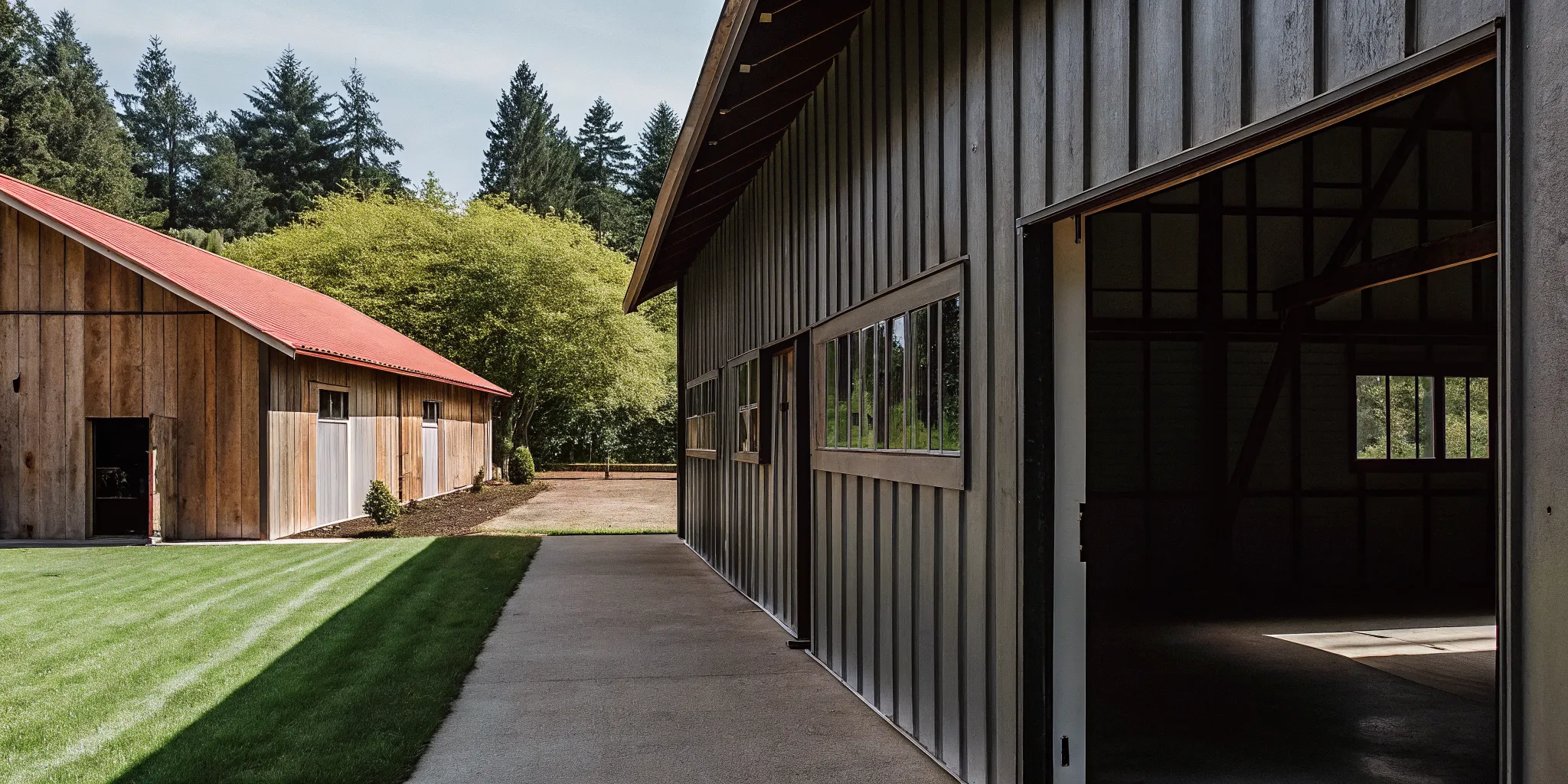
A pole barn vs steel building decision comes down to the frame, foundation, intended use, and site. Post-frame pole buildings use widely spaced engineered wood posts to carry structural loads. Rigid-frame steel buildings use steel columns and beams, typically supported by a more extensive concrete foundation. For many shops, garages, barns, and agricultural buildings in Oregon and Washington, post-frame construction offers a practical balance of design flexibility, construction speed, and cost control.
Design your pole building in 3D and submit it to Locke Buildings for a project-specific quote.
Both systems can perform well when properly engineered for the site and local code. The right choice depends on what you plan to store or do inside, the clear span you need, whether you want insulation, and how much foundation work the property requires. For broader background before comparing systems, read Locke Buildings’ guide to post-frame construction.
What is the difference between a pole barn and a steel building?
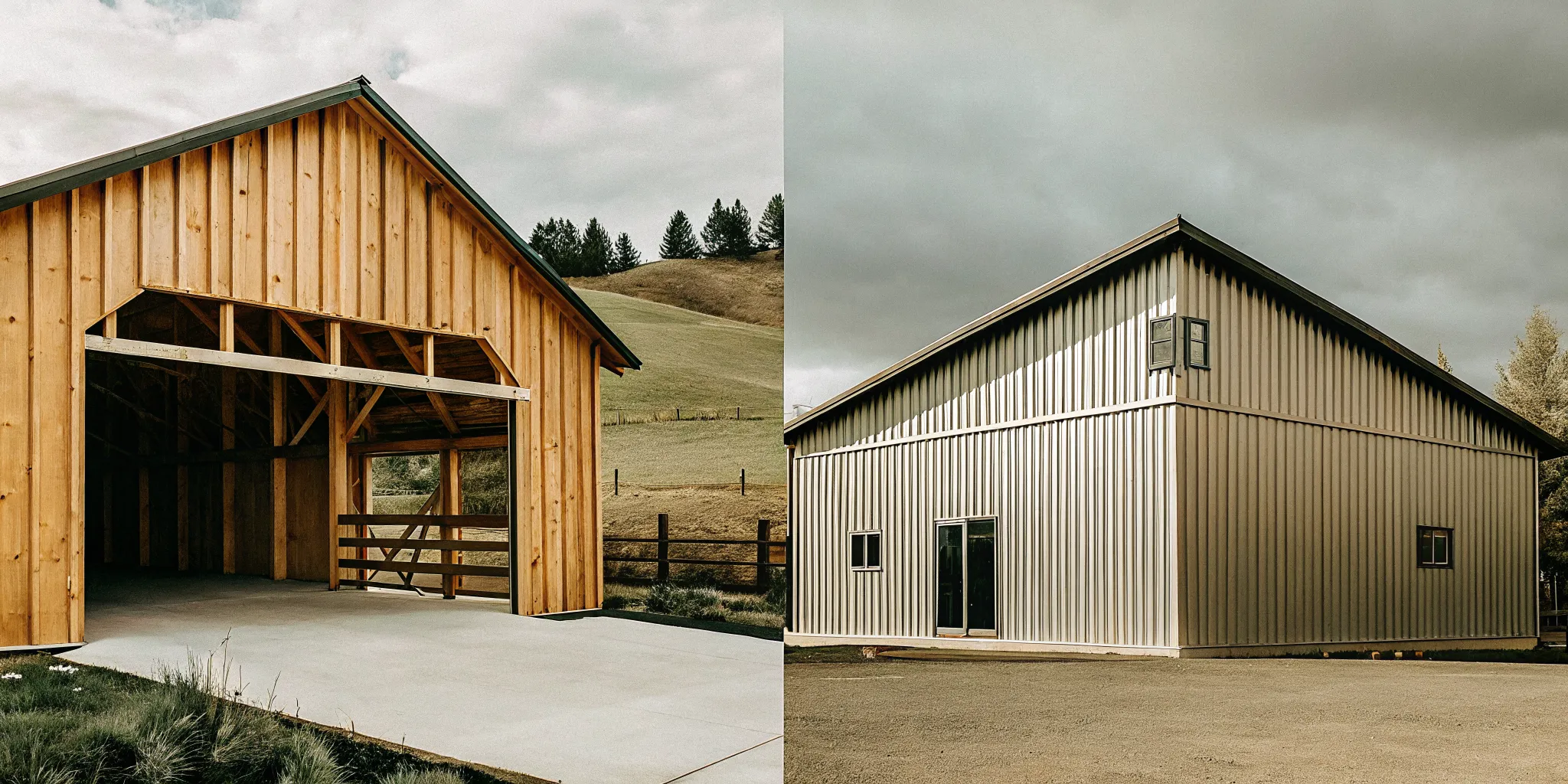
The primary difference is the structural frame. A pole barn, also called a post-frame building, transfers roof and wall loads through large wood posts spaced several feet apart. A rigid-frame steel building transfers loads through steel columns and beams connected to an engineered foundation.
The buildings may look similar from the road because either system can use metal roofing and siding. The important difference is behind the exterior panels. Post-frame buildings rely on posts, roof trusses, girts, and purlins. Rigid-frame steel buildings rely on steel members that create a stiff structural skeleton.
Foundation requirements
A post-frame building can often be supported by embedded posts or posts attached to engineered concrete piers. A concrete floor may be added, but it is not always required before the frame goes up. A rigid-frame steel building commonly requires engineered concrete footings and anchor bolts before the steel frame is erected. Actual requirements depend on the site, building size, use, and local code.
Clear spans and design flexibility
Both systems can create open interiors without load-bearing walls. Steel is often considered for exceptionally wide industrial spaces. Post-frame construction can accommodate the clear spans required for many agricultural buildings, shops, garages, and arenas while making it straightforward to add overhead doors, lean-tos, lofts, and interior partitions.
| Comparison factor | Post-frame pole building | Rigid-frame steel building |
|---|---|---|
| Primary frame | Engineered wood posts and trusses | Steel columns and beams |
| Typical foundation approach | Embedded posts or engineered piers; slab optional for some uses | Engineered concrete footings and anchor bolts |
| Common uses | Barns, shops, garages, arenas, storage, and commercial buildings | Warehouses, industrial facilities, and very wide clear-span buildings |
| Future modifications | Often straightforward with widely spaced posts | Changes may require steel fabrication and engineering |
Cost: pole barn vs steel building per square foot
Post-frame construction often has a lower initial cost for common barn, shop, and garage projects because its structural system can reduce foundation work and erection time. However, there is no dependable universal per-square-foot comparison. Size, site conditions, engineering, finishes, doors, insulation, and local labor all affect the final price.
Comparing only shell prices can be misleading. Ask each provider what is included, then compare the complete scope. A low shell quote may exclude concrete, site preparation, permits, delivery, insulation, interior work, or installation.
What changes the project price?
- Site conditions: grading, access, drainage, and soil conditions affect foundation and preparation costs.
- Building dimensions: width, height, roof pitch, and clear-span requirements influence engineering and material quantities.
- Openings: large overhead doors, windows, and entry doors change framing and installation needs.
- Interior use: a basic equipment shelter needs a different package than a heated workshop or occupied commercial space.
- Delivery and labor: the DIY kit, contractor-supply, and turnkey construction paths have different cost structures.
Locke Buildings offers full-service construction, DIY kits, and contractor-supply options. Kit prices represent material packages and do not include site preparation, concrete, labor, or installation. Turnkey and complex project pricing requires a consultation because the final scope is site-specific. Review Locke’s pole building kit options, then request a detailed quote for a fair comparison.
How do construction timelines compare?
Post-frame buildings can often be enclosed sooner because the frame may be erected without waiting for a complete slab. A steel building can also go up efficiently after fabrication and foundation work are complete, but its front-end engineering, component lead times, and concrete schedule may lengthen the overall project.
The schedule begins before construction. Design decisions, structural engineering, permit review, site access, utility coordination, and seasonal weather can take longer than the frame erection itself. Oregon and Washington projects must also account for local wind, snow, seismic, and land-use requirements.
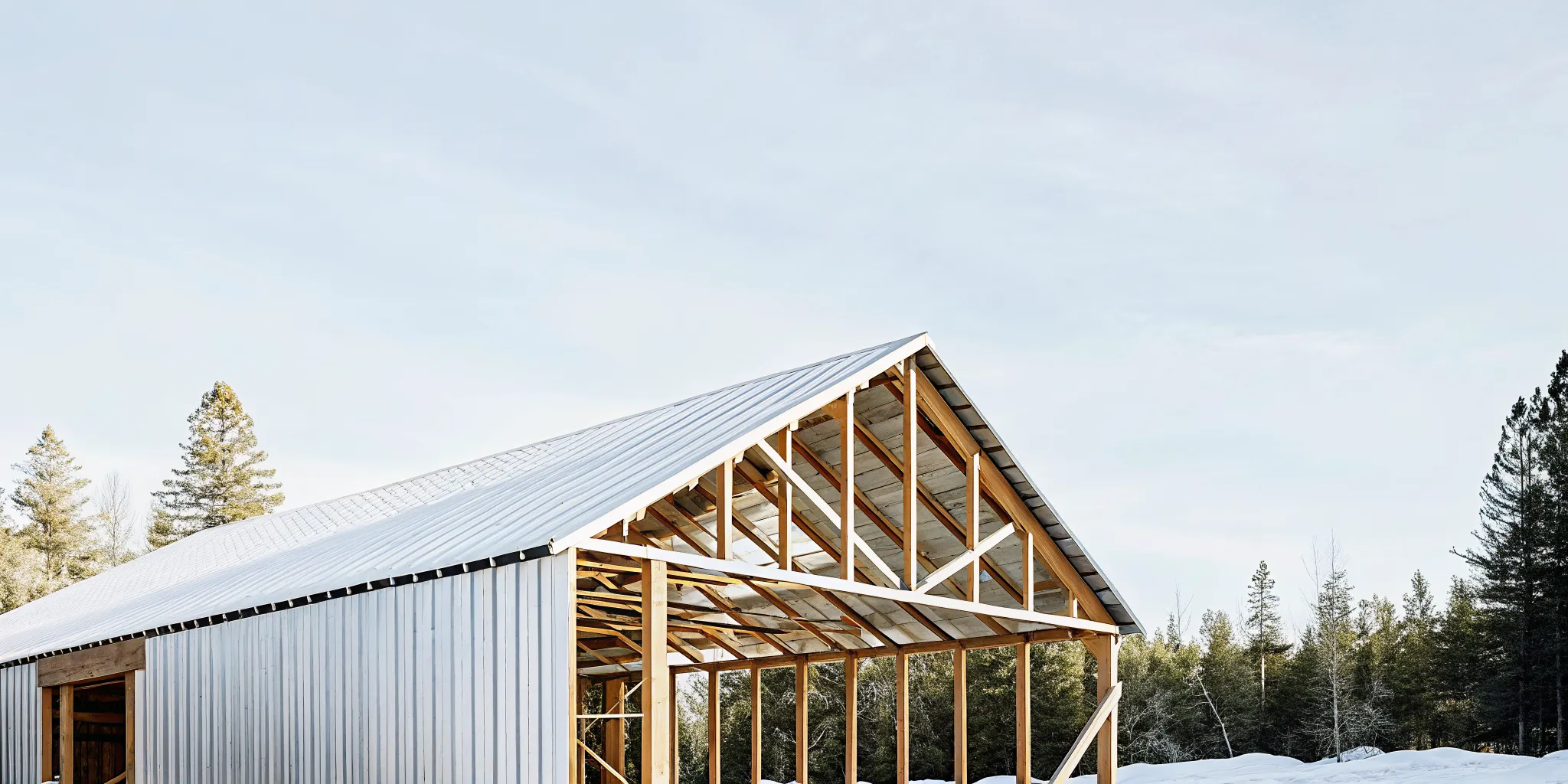
A typical post-frame project sequence
- Define the building’s intended use, dimensions, doors, and interior needs.
- Complete site review, engineering, and permit planning.
- Prepare access, drainage, and the building pad.
- Set posts or brackets, install trusses, and frame the structure.
- Install roofing, siding, doors, windows, and ventilation.
- Add concrete, insulation, utilities, or interior finishes as the scope requires.
Do not choose a system based on a promised timeline alone. Ask for the assumptions behind the schedule and identify which tasks belong to the owner, builder, and outside contractors.
Insulation and energy efficiency
Either building system can be insulated, but post-frame walls naturally provide large, uninterrupted cavities that can simplify insulation installation. Steel conducts heat readily, so rigid-frame designs need careful thermal-break detailing to limit heat transfer through the frame. The best assembly depends on the intended use and local energy requirements.
Thermal bridging and condensation
Thermal bridging occurs when a conductive material creates a path for heat to move through an assembly. Steel framing can create significant thermal bridges if insulation details do not interrupt that path. Wood is less conductive, which can make post-frame wall assemblies easier to insulate effectively.
Condensation control matters in both systems, especially in the wet Pacific Northwest. Warm, humid interior air can condense against cold metal roofing or siding. A suitable vapor-control strategy, roof underlayment, ventilation, insulation, and air sealing help manage moisture. The correct assembly should be selected for whether the building is unheated storage, a workshop, an animal facility, or occupied space.
Plan around the building’s use
An equipment shelter may need ventilation and condensation control but little insulation. A year-round shop, office, or living area needs a complete enclosure plan. Discuss the use early so the frame, wall depth, roof assembly, windows, doors, heating, and ventilation work together instead of becoming expensive changes later.
Which is better for Oregon and Washington weather?
Neither system is automatically better for every Pacific Northwest site. A properly engineered post-frame or steel building can handle local rain, wind, and snow. Performance depends on site-specific engineering, drainage, corrosion and decay protection, ventilation, roofing details, and ongoing maintenance.
Rain, drainage, and moisture
Roof overhangs, gutters, downspouts, grading, and drainage protect the building regardless of frame type. Steel components and fasteners need appropriate coatings where corrosion is a concern. Post-frame designs need properly treated structural wood and construction details suited to the selected foundation method.
Snow, wind, and seismic design
Loads can vary considerably from the coast to the Cascades and from one county to the next. A generic package should not be assumed suitable for every location. Work with a team that understands the jurisdiction and can coordinate the building design with the actual property. Locke Buildings brings regional planning and construction experience to projects in Oregon and Washington.
How should you choose the right building system?
Choose by matching the structure to the site’s constraints, the interior use, and the complete installed cost. Post-frame construction is often an excellent fit for owners who want a versatile barn, shop, garage, arena, or commercial building. Rigid-frame steel may be the stronger candidate for an unusually wide industrial clear span or a project specifically designed around steel.
Before requesting bids, create one scope that every provider can price. Include dimensions, clear height, doors, windows, insulation goals, floor requirements, site work, utilities, and desired finish level. Then ask these questions:
- Is the proposal engineered for the exact site and intended use?
- What site preparation and concrete work are included?
- Who handles permits, delivery, equipment, and installation?
- How will condensation, drainage, wind, snow, and seismic requirements be addressed?
- What is excluded from the quoted price?
Locke Buildings has served Oregon and Washington since 1981 and offers flexible paths for full-service construction, DIY building kits, and contractor supply. Full construction service is concentrated from Centralia, Washington to Salem, Oregon, while kits can be delivered throughout both states. Learn more about the company and its approach on the Locke Buildings about page.
Frequently asked questions
Is a pole barn the same as a metal building?
No. A pole barn is defined by its post-frame structural system, not its siding. Many pole barns have metal roofing and siding, but the primary frame is engineered wood. A rigid-frame metal building uses steel columns and beams as its primary structure.
Does a pole barn need a concrete slab?
Not always. Depending on the use and engineered design, a post-frame building can be erected using embedded posts or concrete piers before a floor slab is installed. Workshops, garages, and occupied spaces often include concrete, while some agricultural storage buildings may not.
Can a pole building be insulated?
Yes. Post-frame walls provide deep cavities that can accommodate several insulation approaches. The correct method depends on the building’s use, local energy requirements, ventilation, and moisture-control strategy.
Can Locke Buildings provide a kit instead of full construction?
Yes. Locke Buildings offers DIY material kits and contractor-supply packages throughout Oregon and Washington, along with full construction services in its core service area. Kit pricing covers the material package and does not include site preparation, concrete, labor, or installation.
Plan your pole building with Locke Buildings
A useful pole barn vs steel building comparison starts with your site and goals, not a generic price claim. Locke Buildings can help you evaluate a post-frame solution for a barn, shop, garage, agricultural building, or commercial project and explain the service path that fits your needs.
Start your 3D building design and submit it for a quote, or request a project estimate from the Locke Buildings team.