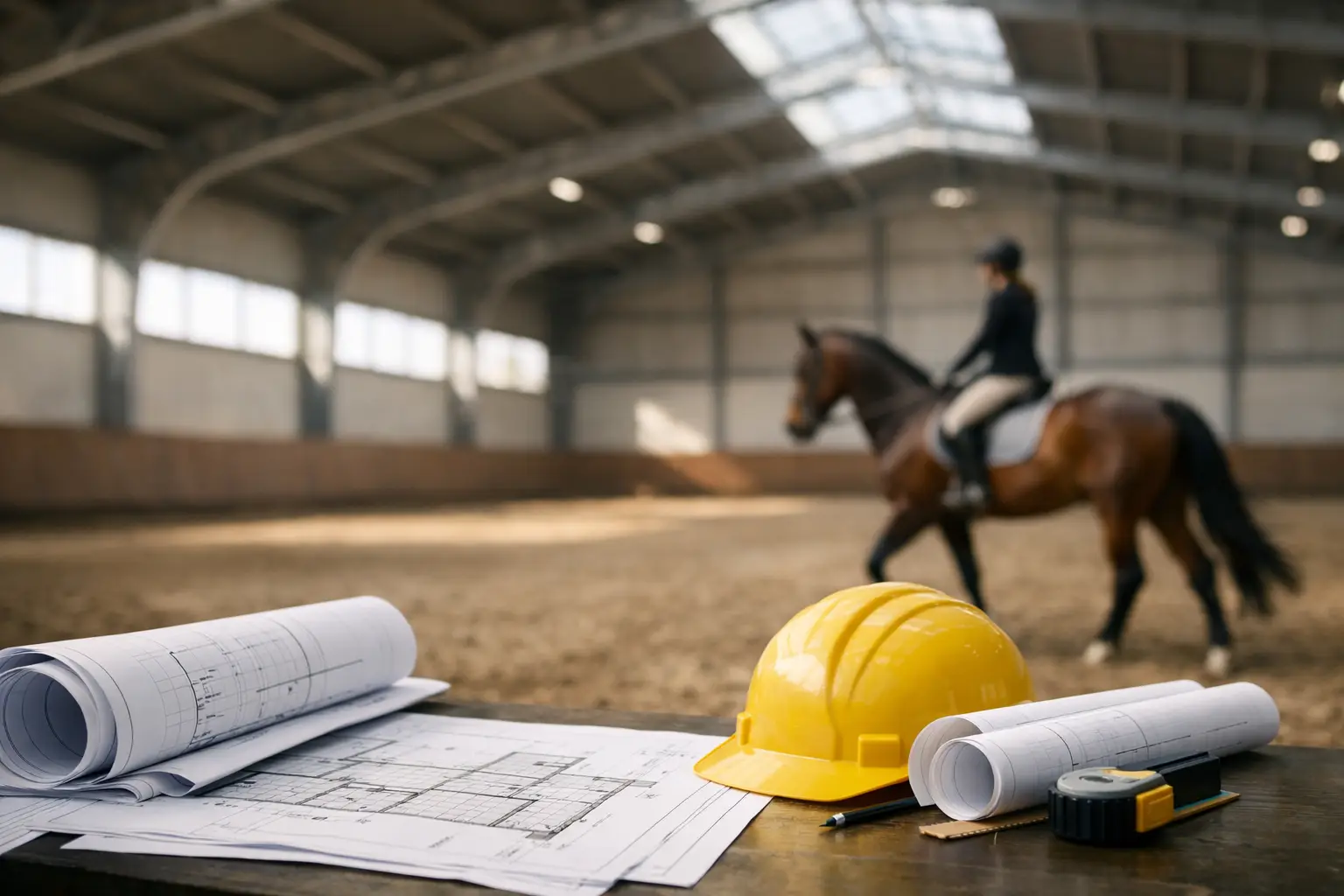
A good indoor arena solves problems you feel every week. It keeps training on schedule through Oregon rain, protects footing from turning inconsistent, and gives horses and riders a safer, more predictable space to work. That is why choosing the right indoor riding arena builder is less about finding a low number on a quote and more about getting the structure, layout, and details right before construction starts.
An arena is not just a big roof over open space. The way it is sized, framed, ventilated, lit, and accessed will affect daily use for years. If you board horses, host lessons, train regularly, or simply want dependable ride time at home, the wrong decisions show up fast in dust, dark corners, awkward door placement, and expensive changes after the building is up.
What an indoor riding arena builder should help you decide
The first job of an experienced builder is not selling a standard package. It is helping you narrow the project to the way you actually ride and manage your property. A private arena for flatwork and light use will not have the same priorities as a training barn with frequent trailer traffic, multiple riders, and attached stalls.
Start with size. Many owners come in with a rough dimension in mind, but usable riding space depends on more than width and length. Riding discipline matters. So does the number of riders in the arena at one time. A smaller footprint may work well for private use, but it can feel tight for lessons, pattern work, or larger horses needing more room to move freely.
Height matters just as much. Eave height affects openness, air movement, visual comfort, and how the arena feels under saddle. A building that looks adequate on paper can ride small if the sidewalls are too low or if the roof structure creates a closed-in feel. An experienced builder should talk through clearances, roof style, and how those choices affect the riding environment.
Why post-frame construction makes sense for arenas
For many equestrian projects, post-frame construction is a practical fit because it creates broad clear spans and efficient enclosed space without forcing the building into a residential-style layout. That matters in an arena, where uninterrupted riding area is the whole point.
A qualified indoor riding arena builder should be able to explain where post-frame performs well and where upgrades may be worth the cost. Wider spans, regional snow and wind loads, and attached-use combinations all affect structural design. A basic arena shell is one thing. An arena that ties into stalls, tack storage, viewing areas, or wash bays is another.
In Oregon and Washington, weather exposure also changes the conversation. Roof pitch, drainage, overhangs, and site orientation matter more than many buyers expect. Wet conditions can turn a workable site into a muddy bottleneck if access, grading, and runoff are not addressed early.
The layout decisions that affect daily use
A riding arena gets judged every day by how it functions, not by how it looked on the first rendering. Door placement is a good example. Large equipment access may be necessary for dragging footing, bringing in materials, or moving tractors. At the same time, rider entry and horse flow should feel safe and straightforward.
That is where a builder with equestrian experience helps. Sliding doors, overhead doors, and entry points each have trade-offs. A large door in the wrong location can create drafts, glare, and traffic conflicts. A smaller or poorly placed opening can make maintenance a hassle.
Lighting is another area where owners either benefit for years or regret shortcuts quickly. Indoor arenas need consistent, useful light, not just enough fixtures to say the building is lit. Placement should reduce shadows and bright-dark transitions that can bother horses. Natural light can help, but too much direct glare can be just as frustrating as a dark arena.
Ventilation belongs in the same category. Air movement affects horse comfort, rider comfort, and dust control. The right answer depends on building size, enclosure level, and local climate. Some owners want a more open-sided feel. Others need a tighter structure for winter protection. Neither is automatically right. It depends on how the arena will be used and what conditions it needs to handle.
Footing and base work should shape the building plan
Many buyers focus on the shell first and assume footing can be handled later. In practice, footing performance starts with the site, the base, and moisture control. If drainage and subgrade preparation are poor, even high-quality footing materials will not perform the way they should.
A capable indoor riding arena builder should ask questions about base preparation, equipment access, and how the arena will be maintained. The building and the riding surface are connected. Door thresholds, finished floor elevations, and moisture management all affect the final result.
This is especially important if the building site has slope, heavy seasonal rain, or soft ground conditions. Spending money in the right places below grade often prevents bigger costs later. That may not be the exciting part of the project, but it is often where long-term performance is won or lost.
Budget is not just square footage
Arena pricing is rarely as simple as cost per square foot. That number can be useful as a rough starting point, but it hides the real variables. Width, length, height, roof style, engineering requirements, site conditions, doors, insulation choices, and interior build-out all move the number.
That is why two arenas with similar dimensions can land at very different price points. One may be a straightforward shell on a clean site. The other may need more complex access, higher snow load design, larger openings, premium lighting, and better weather protection.
A good builder should be direct about these trade-offs. If the budget is fixed, it helps to know which items are structural needs and which ones are optional upgrades. Sometimes owners are better served by getting the shell and layout right now, then adding selected finish features later. Other times it makes more sense to build complete from the start to avoid disruption and duplicate labor.
Full-service build or kit package
Not every buyer needs the same path. Some want a turnkey contractor to handle design, materials, and construction. Others have a trusted crew already lined up or prefer to manage their own build. The right indoor riding arena builder should be able to support either route clearly.
That flexibility matters because project readiness varies. One owner may have engineered plans, a prepared site, and a concrete timeline. Another may still be deciding on dimensions, roof style, and whether to attach storage or stalls. A builder who can quote a complete build or provide a building kit gives you room to match the project to your budget, timeline, and labor plan.
For buyers in Oregon and Washington, working with a regional specialist can also simplify planning. Snow load, wind exposure, moisture, and local building expectations are not side issues. They affect the actual design and quoting process. At Locke Buildings, that practical planning approach is part of how projects move from rough idea to buildable scope.
Questions to ask before you request a quote
Before talking to a builder, get specific about how the arena will be used. Think through rider count, discipline, horse size, equipment access, footing maintenance, and whether you want open or enclosed wall sections. Also consider whether the arena needs to connect to stalls, storage, tack space, or trailer access.
It helps to know your site conditions too. A flat, accessible site is different from a tight location with drainage challenges. The more clearly you can describe the property, the faster a builder can identify likely cost drivers and design needs.
If you already have sketches, site photos, or plan ideas, bring them into the conversation early. Good quoting depends on real project information, not guesswork. That is especially true for custom arena buildings where a few design choices can change cost and usability in a big way.
Choosing the right indoor riding arena builder
The right builder should sound like a builder, not a brochure. You want someone who asks practical questions, explains structural and layout trade-offs, and helps you define the project before putting a number in front of you. Experience matters, but so does the ability to guide decisions that fit your property and your actual use.
A well-planned arena is one of those buildings you appreciate more over time. When the doors are where they should be, the light works, the space rides well, and the structure handles the weather, you stop thinking about the building and get on with using it. That is usually the clearest sign the job was planned right from the start.