
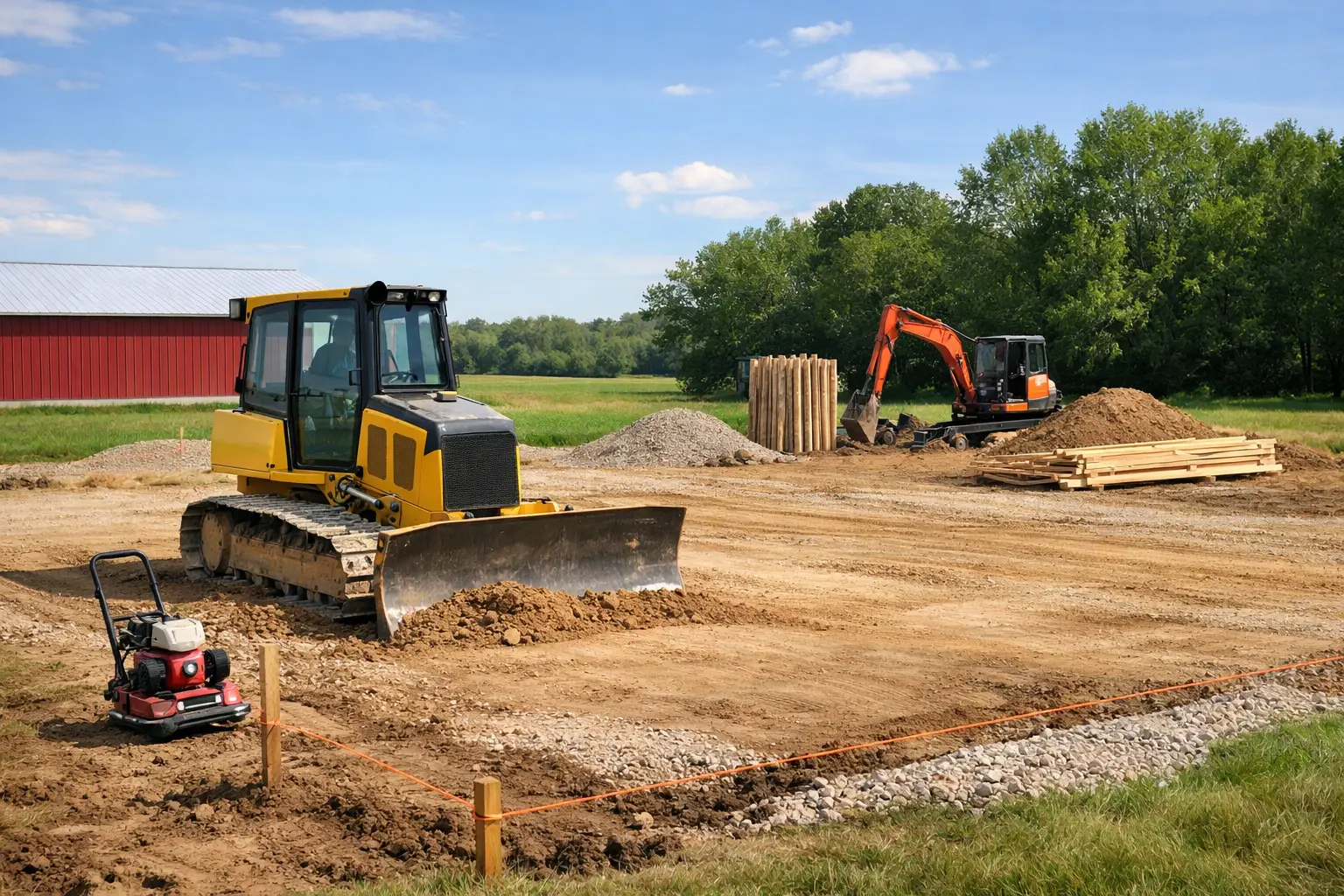
A pole barn can go up fast once materials and crew are ready. The part that slows projects down is usually the ground underneath it. This pole barn site preparation guide is built around the real issues that affect schedule, cost, and long-term performance – grade, drainage, access, utilities, and permits.
If the site is right, the building process is straightforward. If the site is soft, uneven, poorly drained, or hard to reach, even a well-designed post-frame building can run into delays and added expense. That is why site prep is not a side task. It is part of the build.
What this pole barn site preparation guide should help you decide
Before you think about trim colors or door layouts, you need to know whether your intended building location can actually support the project. That starts with a few practical questions. Is the site level enough to build efficiently? Does water move away from it, or collect on it? Can delivery trucks and equipment get in and out without tearing up the property or getting stuck?
For some owners, the best location is obvious. For others, there are trade-offs. A spot close to the house may be convenient for a shop or garage, but it may also create drainage problems or reduce trailer access. A site farther out may offer better grade and more room to work, but it can add utility trenching and driveway cost. Good planning means looking at the whole job, not just the footprint.
Start with building placement, not just open space
A clear patch of land is not automatically a good building site. Placement affects how the building functions for years, especially on farms, ranches, and rural properties where daily traffic matters.
Think first about use. If the building is for hay storage, equipment, livestock, a workshop, or a commercial operation, the approach path matters as much as the pad. Trucks, trailers, tractors, and service vehicles need room to turn, back, load, and unload. Door placement should make sense with the way equipment actually moves.
You also want enough space around the structure for overhangs, gutters, future lean-tos, concrete flatwork, and maintenance access. Squeezing a building into a tight area may work on paper but create headaches once it is built.
Orientation matters too. In Oregon and Washington, rainfall, prevailing winds, and sun exposure can all affect how a site performs. In some cases, rotating the building improves drainage and reduces weather impact at large openings. In others, the main goal is practical access from an existing driveway or yard.
Grade and drainage come first
If there is one issue that deserves extra attention, it is water. A post-frame building needs a stable, well-drained site. Standing water around posts, splashback against siding, muddy access, and erosion around the perimeter all shorten the life of the project and make the building less useful.
A good site does not have to be perfectly flat, but it does need controlled grade. Ideally, the finished pad sits slightly higher than surrounding ground so water sheds away from the building. That often means bringing in fill, cutting high spots, or both.
This is where owners sometimes try to save money too early. Building on an unprepared low area can cost more later in regrading, drainage correction, or slab issues. It is usually more cost-effective to shape the site properly before construction starts.
How much slope is too much?
There is no one-size-fits-all answer. A mild slope may be easy to work with and even helpful for drainage. A steeper site may require substantial excavation, retaining work, imported fill, or a redesign of the building elevation. The larger the building, the more grade differences matter.
If your property has rolling ground or a hillside location, do not assume the first site choice is the best one. Moving the building a short distance can sometimes save a significant amount in prep work.
Drainage is more than runoff at the roof line
Roof runoff is only part of the drainage picture. Surface water from surrounding land can be the bigger problem. If uphill water drains toward the pad, the site may need swales, ditches, culverts, or additional grading to redirect flow.
The goal is simple: water should leave the building area, not move through it. That includes winter conditions when soils are saturated and heavy rain exposes problems that were easy to miss during dry weather.
Soil conditions can change the plan
Not all ground carries a building the same way. Native soils vary across the Northwest, and that matters for compaction, drainage, and long-term stability. Clay-heavy soils can hold water and become soft. Organic soils or previously disturbed fill may not provide reliable bearing without correction.
If the site was once part of a ponded area, an old farm dump, a heavily filled pad, or a location with known soft spots, you need to address that early. The wrong base under the building and surrounding apron can lead to settlement, uneven slabs, ruts, and drainage failures.
Some sites only need proof rolling and compacted base rock. Others need excavation and replacement of unsuitable material. It depends on the building size, use, and what is already in the ground. A machine shed used a few times a week and a high-traffic commercial building do not always need the same prep approach.
Access for trucks and equipment is part of site prep
This is one of the most overlooked parts of the job. A build site might look reachable in a pickup, but that does not mean material deliveries, truss trucks, concrete trucks, lifts, and excavation equipment can access it safely.
Ask yourself what the route looks like in wet weather, not just in summer. Narrow gates, soft shoulders, low tree limbs, overhead wires, sharp turns, and steep approaches all create problems. If access is limited, some projects need temporary widening, additional rock, or clearing before construction begins.
That work is not wasted. Better access helps with the build, but it also improves the finished building’s usability. A barn, shop, or storage building should be easy to get to year-round.
Utilities, setbacks, and permits need to be handled early
A good-looking building location can still fail once paperwork and utilities are considered. Setbacks, easements, septic areas, floodplain restrictions, and local planning rules all affect where a building can go.
If the building will have power, water, or plumbing, think through trench paths before finalizing the pad location. A farther site may be workable, but utility runs can materially affect budget. The same goes for future plans. If you may add a wash bay, office space, or barndominium features later, plan the site with that in mind now.
Property owners sometimes focus only on getting the shell built, then realize later that utility routing is awkward or expensive. It is better to solve those conflicts before excavation begins.
Preparing the pad for a post-frame building
The pad is the working platform for the build and the foundation for everything that follows. It should be laid out accurately, graded to the intended elevation, compacted properly, and sized to support construction activity around the building perimeter.
That last point matters. The building footprint alone is not enough. Crews need room to work, and finished grade around the structure should direct water away from walls and doors. If you are adding a slab, interior floor elevation and exterior grade need to be coordinated from the start.
A common mistake is creating a pad that is technically large enough for the building but leaves no room for aprons, sidewalks, or door approaches. Another is skipping proper compaction because the ground looks dry and firm at the moment. Dry weather can hide weak conditions.
Gravel, rock, and base material
Not every project uses the same amount or type of base material. The right approach depends on native soil, drainage, traffic load, and whether concrete is part of the plan. In general, clean, compactable base rock improves stability and keeps the site workable during construction.
This is especially valuable on rural properties where heavy vehicles will keep using the building through wet seasons. A little more prep at the start often means a cleaner, more durable approach later.
Who handles what matters more than people expect
Some owners want a full-service contractor to manage the building from layout to completion. Others plan to hire separate excavation and concrete crews, or to take on part of the project themselves with a building kit. Either route can work, but responsibilities need to be clear.
Site prep is where coordination mistakes show up fastest. If one party assumes the pad includes utility trenching and another assumes it does not, the project stalls. The same goes for final elevations, drainage work, access roads, and concrete timing.
If you are working with multiple trades, define scope before work begins. Make sure everyone is using the same site plan, dimensions, elevations, and building location. For customers buying kits or managing their own subcontractors, this step is just as important as material ordering.
Timing your site work
Do not wait until materials are on the way to start moving dirt. Site prep often takes longer than expected, especially when weather, permitting, utility locates, or imported fill are involved.
In the Northwest, timing matters. A site that is easy to grade in one part of the year may become difficult and expensive in another. If rain turns the area into mud before the pad is stabilized, progress can stop quickly. Starting earlier gives you room to correct issues without pushing the whole project back.
For many owners, the smartest move is to treat site prep as the first phase of the build, not the last item before construction. That creates a better path for scheduling, pricing, and jobsite readiness.
A well-prepared site does more than help the building go up. It helps the building work the way you expect once it is finished. If you get the ground right, every step after that gets easier.