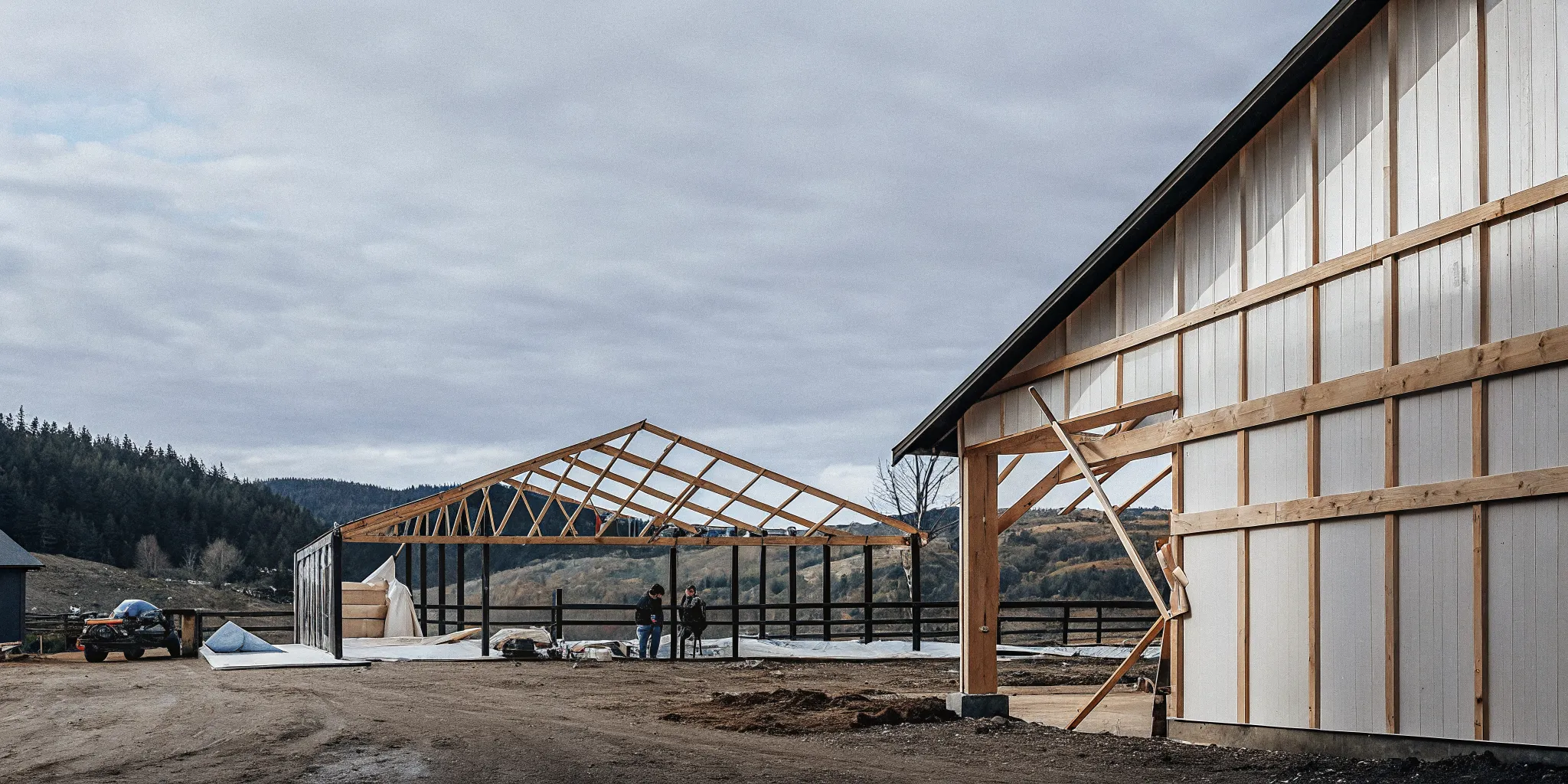
How long to build a pole barn Oregon property owners should plan for depends on the permit, site, materials, and building scope. A straightforward project may move from planning to completion in a few months, while a complex commercial building, arena, or site with permit challenges can take longer. This timeline guide explains each phase so you can plan with fewer surprises. For a broader look at the building system, read our complete guide to post-frame construction in Oregon and Washington.
How long to build a pole barn Oregon: typical timeline
Most pole barn schedules have four major phases: design and estimating, permitting and site preparation, material production and delivery, and construction. The work on site may take only a portion of the total calendar. Decisions, jurisdiction reviews, weather, and material lead times also shape the finish date.
| Phase | What happens | Main schedule variable |
|---|---|---|
| Design and estimating | Size, use, options, drawings, and budget are defined | How quickly decisions are finalized |
| Permits and site prep | Plans are reviewed and the building pad is prepared | Local jurisdiction and site conditions |
| Materials | The package is finalized, produced, and delivered | Selections and supplier lead times |
| Construction | Posts, framing, roofing, siding, and selected finishes are installed | Building complexity and weather |
Locke Buildings helps Oregon and Washington owners coordinate these moving parts. Full construction service is concentrated from Centralia, Washington to Salem, Oregon. DIY building kits can be delivered throughout both states.
How long do design and permitting take?
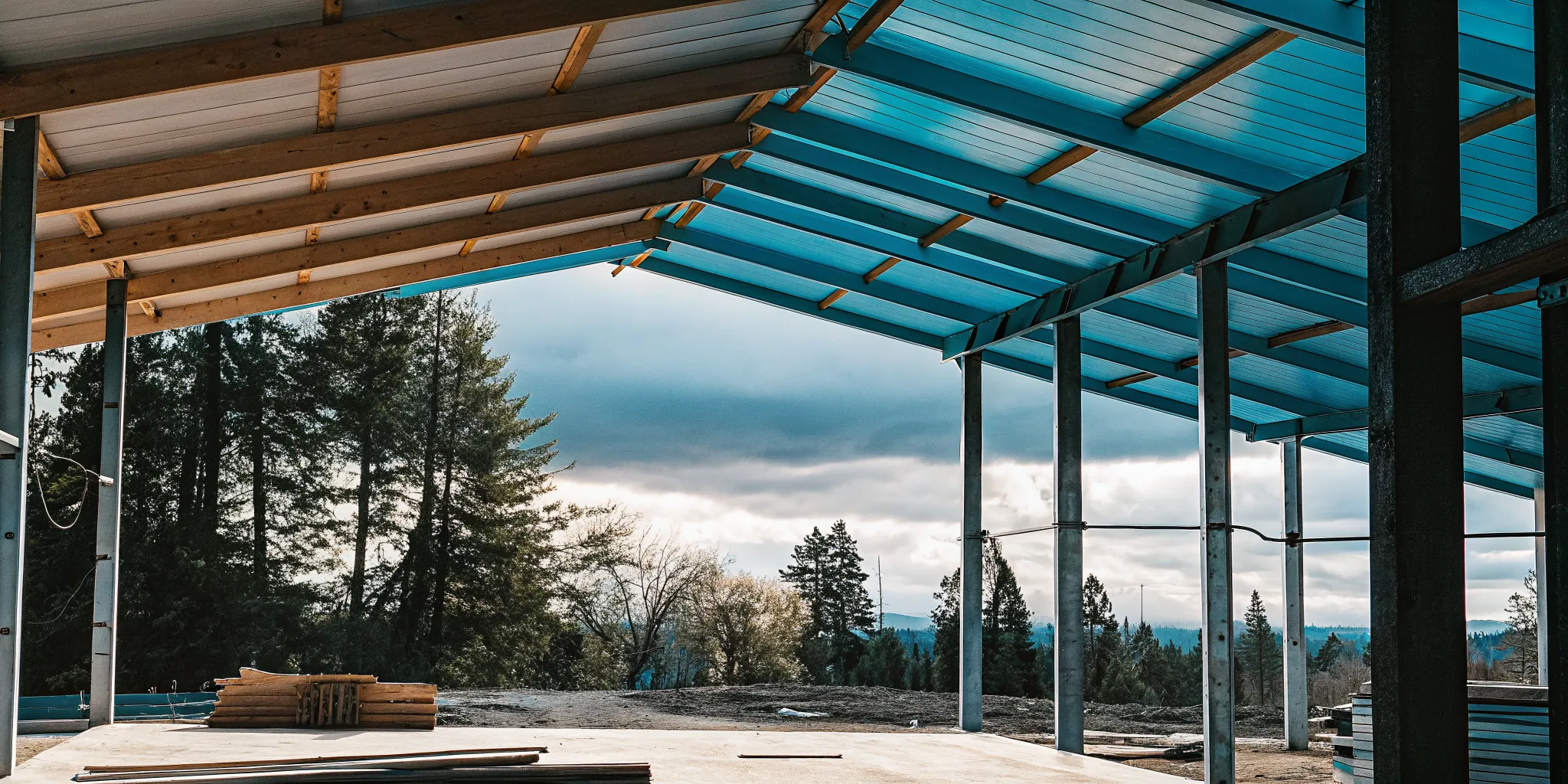
Design and permitting often determine when construction can begin. The design phase is faster when you know the building’s intended use, approximate dimensions, door locations, and preferred features. Changing those choices after engineering or ordering can reset parts of the schedule.
Define the building before requesting permits
Start by confirming how the building will be used. A simple equipment shelter, conditioned workshop, equestrian arena, and commercial facility can have different design and review requirements. Locke’s pole barn design guide can help you organize the major choices before requesting a quote.
Allow for local review
Permit timing varies by city and county. The jurisdiction may request site plans, engineered drawings, structural details, or additional information before approval. Ask the local building department what it requires before finalizing the schedule. A permit estimate should be treated as a planning range, not a guaranteed approval date.
What site preparation happens before construction?
A ready building pad gives the crew safe access and helps construction proceed efficiently. Site preparation can include clearing, grading, drainage work, excavation, utility coordination, and establishing access for delivery trucks. The exact scope depends on the property and building use.
Resolve access and drainage early
Wet ground, steep grades, tight access, or unknown utilities can delay mobilization. Discuss these conditions during planning, not when materials arrive. Oregon’s wet season also makes drainage and a stable work area especially important.
Coordinate concrete with the building plan
Concrete scope and timing vary by project. A material kit price does not include site preparation, concrete, labor, or installation. Confirm who is responsible for each item and when it must happen. For more information on the building method itself, revisit the post-frame construction guide for Oregon and Washington.
How do material lead times affect a pole barn kit?
Material ordering begins after the design and package details are finalized. Lead times depend on the package, supplier schedules, selected components, and delivery location. Custom doors, specialty finishes, or late design changes can add time.
A Locke Buildings kit is a material package for owners or contractors who plan to build. It should not be confused with turnkey construction. Review the pole building kit options, confirm what is included, and plan separately for permits, site work, concrete, equipment, and labor.
Construction duration by building type
On-site construction time grows with size, complexity, and finish level. A basic agricultural storage building typically has fewer details to coordinate than an insulated workshop, horse arena, barndominium shell, or commercial building. Added doors, windows, lofts, interior partitions, and specialty systems require more sequencing.
- Simple agricultural or storage building: A clear layout and limited finishes can support a shorter field schedule.
- Garage or workshop: Large doors, insulation, electrical work, and interior uses add coordination.
- Equestrian or commercial building: Larger spans, specialty features, and additional reviews can extend planning and construction.
- DIY kit: The owner’s crew size, experience, equipment, and availability determine the installation pace.
For an overview of common layouts and uses, see Pole Buildings 101. Locke Buildings can help compare a kit with full-service design-build construction based on your location and goals.
Factors that can extend your timeline
The most reliable schedule includes room for issues that cannot be controlled completely. Planning for them is better than assuming every phase will happen back to back.
- Permit revisions: Missing documents or requested changes can extend review.
- Site conditions: Drainage, grading, access, utilities, or unsuitable ground may need attention.
- Design changes: Revising dimensions or features after engineering or ordering can affect multiple phases.
- Weather: Heavy rain, wind, snow, or saturated ground may interrupt site work and installation.
- Specialty components: Custom products can have longer or less predictable lead times.
- Trade coordination: Concrete, electrical, plumbing, and interior work must align with the shell schedule.
Keep decisions documented, assign responsibility for every pre-construction item, and ask for updated lead times before committing to a move-in date. Those habits reduce avoidable delays without relying on unrealistic guarantees.
Frequently asked questions
Can a pole barn be built during Oregon’s rainy season?
It can be possible, but site access, drainage, wind, and saturated ground affect safe and efficient work. Build weather flexibility into the schedule and prepare the pad before materials arrive.
Does a pole barn kit arrive ready to build?
A kit provides the selected material package, but the owner still needs to coordinate permits, site preparation, concrete, equipment, labor, and installation. Confirm package contents and responsibilities before ordering.
When should I contact a pole barn builder?
Contact a builder as soon as you have a likely use, location, and approximate size. Early planning gives you more time to resolve permits, site work, design choices, and material availability.
Can Locke Buildings give me an exact completion date?
A project-specific schedule can be developed after the scope, location, permit path, site conditions, and service model are understood. Because outside factors can change, treat early dates as planning estimates.
Plan your Oregon pole barn timeline with Locke Buildings
Locke Buildings has served Oregon and Washington property owners since 1981 with full-service construction, DIY kits, and contractor supply options. The best next step is to define the building, share the site details, and request a timeline based on your actual project.