
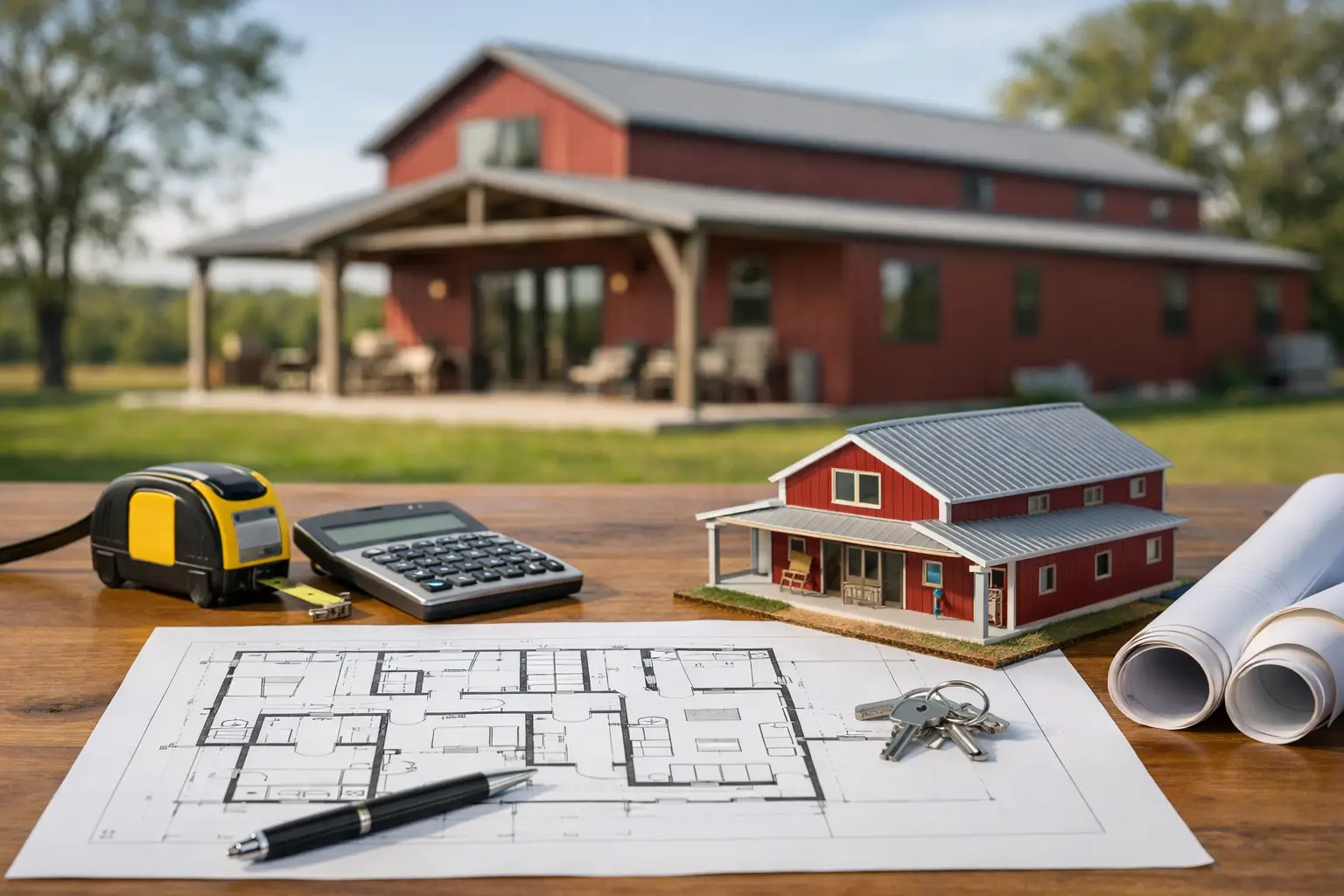
A good barndominium floor plan guide starts with a hard truth: most layout mistakes are expensive, and they usually show up after the shell is built. The kitchen feels too far from the entry. The mudroom is too small for boots and wet gear. The shop is perfect on paper but awkward once you try to move equipment through it. If you are planning a barndominium in Oregon or Washington, the floor plan needs to work for your land, your daily routine, and the way post-frame construction actually goes together.
Barndominiums attract buyers for a reason. They can combine living space, storage, hobby space, vehicle parking, and work areas under one roof. That flexibility is the biggest advantage, but it also creates more layout decisions than a standard house. The right plan is not just about square footage. It is about how the building will be used every day and how cleanly the residential side and utility side fit together.
What a barndominium floor plan guide should help you decide
The floor plan should answer practical questions before you start pricing finishes. How much of the building is living space, and how much is garage, shop, storage, or animal-related use? Where do people enter most often? What spaces need plumbing? Which areas need higher ceilings, wider doors, or stronger separation for noise and dust?
Those decisions affect cost, comfort, and buildability. A simple rectangular layout is usually more efficient than a plan with multiple jogs and corners. Longer plumbing runs cost more. Complicated rooflines may look appealing but can add expense without improving function. In post-frame construction, the smartest plans usually keep the shell efficient and put the customization where it matters most – inside the layout and openings.
Start with use, not rooms
A common mistake is beginning with a list of rooms copied from a house plan site. That approach misses what makes a barndominium different. Instead, start by defining how the building needs to perform.
For some owners, the barndominium is primarily a home with an attached garage and shop. For others, it is a working building with living quarters attached. Those are not the same project, and the floor plan should reflect that from the beginning.
If the living area is the priority, focus on privacy, natural light, bedroom placement, and the relationship between kitchen, dining, and great room. If the shop or storage side is the priority, think first about vehicle movement, overhead door placement, slab use, ceiling height, and whether equipment needs clear spans or interior separation.
The best layouts do not try to make every area equal. They make the main use of the building obvious.
Separate clean space from dirty space
This is where many barndominium plans either work well or become frustrating. Daily life gets easier when the plan creates a clear transition between clean living areas and dirty work areas.
That transition usually includes a mudroom, laundry room, utility room, or side entry buffer between the home and the shop or garage. In rural settings, this matters even more. Boots, wet clothes, feed, tools, pets, and work gear all need a place to land before they enter the kitchen or main living area.
A direct door from shop to kitchen sounds convenient until dust, noise, and temperature swings become part of the routine. A short buffer zone often makes the whole building feel more livable. It also gives you a better place for freezers, coats, cleaning supplies, and mechanical equipment.
Get the shop and garage layout right early
In a typical house, the garage is often treated as secondary space. In a barndominium, that is rarely true. The shop, garage, or storage bay may drive the overall dimensions of the building.
Think about what needs to fit inside, not just today but a few years from now. Trucks, trailers, tractors, side-by-sides, boats, campers, and workshop benches all need clearance. Door width and door height matter as much as square footage. So does turning radius inside the building.
If you need a workspace, decide whether it should be fully open or divided into separate bays. Open space gives flexibility. Separate bays can reduce noise, improve organization, and make heating or cooling more manageable. It depends on whether the space is mostly for parking, active work, or long-term storage.
Plan the living side for how you actually move through the day
Open-concept living is common in barndominiums, and for good reason. It makes efficient use of square footage and fits the wider shell dimensions many post-frame buildings use well. But open does not mean undefined.
The kitchen should have a practical relationship to the main entry, pantry, dining area, and outdoor access. Bedrooms should not open directly into noisy gathering spaces if privacy matters. Bathrooms should serve the spaces people use most without forcing guests through private areas.
Single-story living is one of the biggest advantages of many barndominium plans. If this is a long-term home, think carefully about aging in place. Wider hallways, a main-level primary suite, step-free entries, and a simple circulation path can make the building more useful for decades.
Lofts can work, but they are not automatically the best way to add space. They often fit guest rooms, offices, or bonus areas well. They are less ideal if the space needs to be heavily used every day by people who do not want stairs.
Utility rooms are not wasted space
Owners often fight for every square foot of visible living area, then regret shrinking the support spaces. In a barndominium, utility areas do real work.
Mechanical equipment, water heaters, electrical panels, well equipment, laundry, pantry overflow, and household storage all need a home. If your plan includes radiant floor heat, extra freezers, or heavy use of exterior gear, these rooms matter even more.
Shorting the utility side of the floor plan usually leads to clutter elsewhere. A slightly larger mudroom or utility room can improve the function of the entire building more than adding a few feet to a bedroom.
The barndominium floor plan guide to future-proofing
A good barndominium floor plan guide should look past move-in day. Buildings that work well over time usually allow for change.
Maybe the shop needs to become part business space. Maybe parents move in later. Maybe kids leave home and one bedroom becomes an office. Maybe you want to finish part of an unfinished bay in a later phase. These are not edge cases. They are common life changes, especially for rural properties and owner-build projects.
Future-proofing does not mean overbuilding everything now. It means making smart structural and layout decisions so the building can adapt. That might include placing plumbing walls efficiently, allowing for future interior partitions, sizing the shell with expansion in mind, or planning windows and doors so a space can be repurposed later.
Match the plan to the site
A floor plan that looks good on paper can perform poorly on the property. Site conditions matter. Views, sun exposure, driveway location, drainage, slope, prevailing weather, and access to utilities should all shape the layout.
For example, the main shop doors may need to line up with the easiest equipment approach, not the front elevation you first imagined. The living area may benefit from orienting large windows toward a view while protecting against afternoon heat or weather exposure. Covered porches can be useful, but only if they fit how you use the site.
This is one reason generic internet plans often miss the mark. A barndominium is not just a house plan dropped into a shell. It is a building that has to work as a whole system on a real property.
Keep the shell efficient
Customization matters, but so does discipline. The more complicated the shell becomes, the more likely cost rises without adding day-to-day value.
Straightforward building footprints are usually the best place to start. A clean rectangle often gives you the most usable interior space for the money. Roof style, overhangs, window placement, and door locations can still give the project character without forcing unnecessary complexity into the frame.
That does not mean every project should be basic. It means changes should earn their keep. If a bump-out improves the primary suite, mudroom, or entry in a meaningful way, it may be worth it. If it is there only because the drawing looked plain, it is worth a second look.
Build path matters when choosing the plan
The right floor plan also depends on how you plan to build. If you want a turnkey contractor, you can often tackle more of the coordination through one team. If you are buying a building kit or using your own contractor, the plan needs to be especially clear about dimensions, openings, interior use, and how the shell supports the finished layout.
This is where working with specialists matters. A barndominium plan has to respect both residential living needs and post-frame building logic. Locke Buildings works with owners who want either a fully built project or a kit path, and in either case the best results come from getting the plan defined early, before quoting turns into change orders.
If you are still narrowing the layout, focus on the decisions that carry the most weight: overall size, percentage of living versus shop space, entry points, ceiling heights, wet areas, and door placement. Those choices shape almost everything that follows.
The best floor plan is not the one with the most features. It is the one that fits your property, your work, and the way you actually live when the doors are open, the weather turns, and the building has to perform every day.