
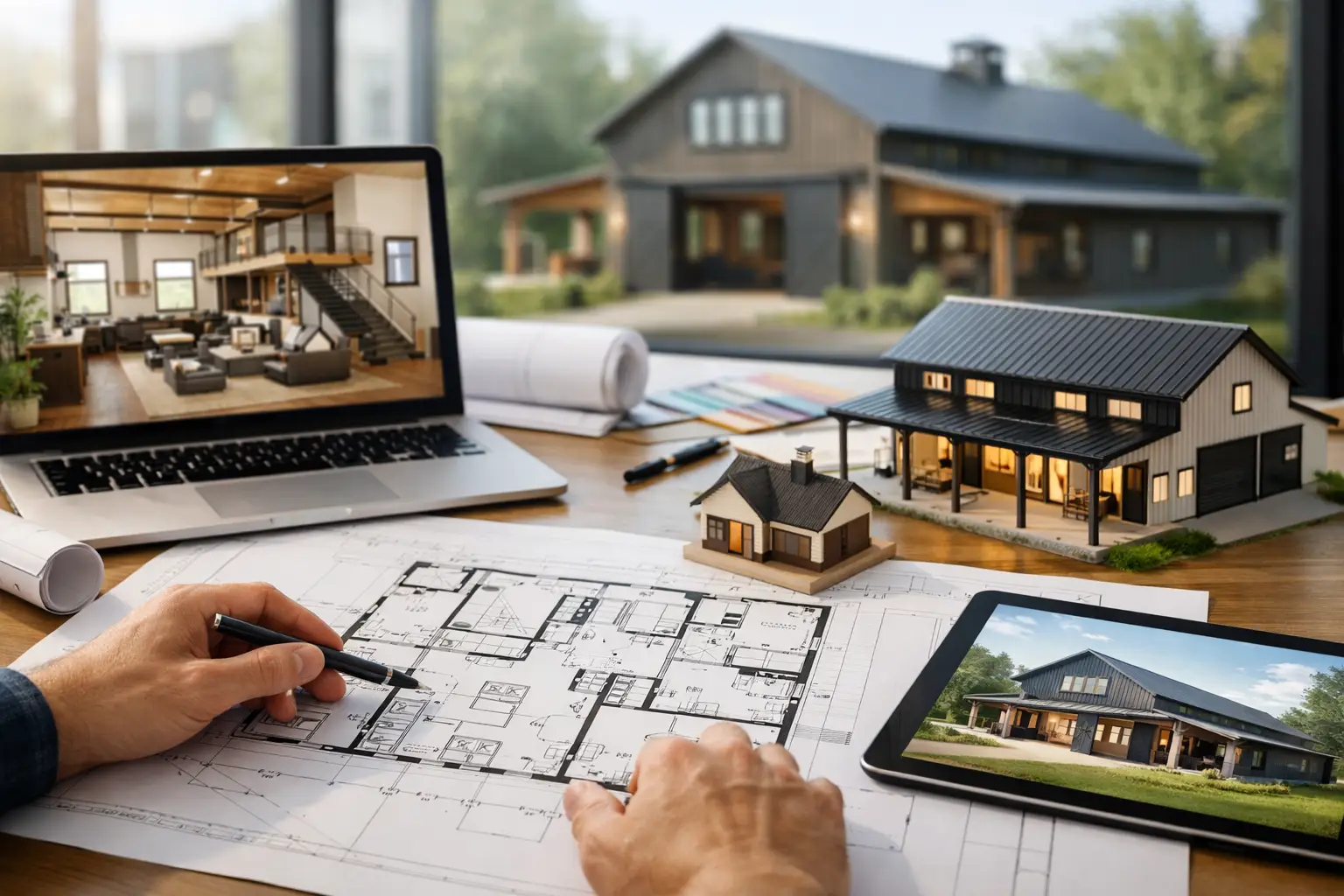
A barndominium layout looks simple on paper until you start placing walls, doors, plumbing, storage, and daily traffic patterns into the same building. That is where good planning matters. If you are figuring out how to plan a barndominium layout, the goal is not just to make the floor plan fit inside the shell. The goal is to make the building work for the way you actually live, store equipment, move through the space, and use the property over time.
A lot of layout problems start with the wrong first question. People ask how many bedrooms they can fit into a footprint before they ask how the building should function as a whole. In a post-frame barndominium, the best layouts usually come from working outside in. Start with the building size, the site, and the structural logic first. Then shape the living space around those realities.
Start with the building’s job
Before you sketch a single room, decide what the barndominium is supposed to do. For some owners, it is a full-time home with an attached shop. For others, it is a house with equipment storage, livestock support space, a home office, or a place to operate a small business. Those uses affect the layout more than finishes ever will.
If the shop, garage, or storage side is just as important as the living area, treat it that way from the beginning. Do not let the house absorb the entire footprint and leave the utility side undersized. A 40×60 building can feel generous until you try to fit a home, a mechanical room, a mudroom, vehicle parking, and workshop space into it. The right balance depends on how you live on the property.
This is also where future use matters. If you expect more vehicles, a larger family, aging parents, hobby space, or business activity later, build that flexibility into the plan now. Moving an interior wall on paper is easy. Reworking the shell after construction is not.
Plan the shell before the rooms
One of the most practical ways to approach how to plan a barndominium layout is to think in terms of the building envelope first. Width, length, roof style, post spacing, ceiling height, and door placement all influence what happens inside.
A wider building can give you better room proportions and cleaner circulation, but it may also change cost, roof structure, and span requirements. A longer footprint may fit the site better and separate living and shop zones more naturally. Neither is automatically better. It depends on your lot, access, and priorities.
Garage doors, overhead doors, porches, and main entries should be part of the layout conversation early. If your daily entry is through a mudroom from the shop or garage, place that route with intention. If you want a front porch that opens into the main living area, that entry should align with the interior flow instead of becoming an afterthought.
Window placement matters too. In many barndominiums, the shared living spaces benefit from the best natural light, while utility rooms, bathrooms, pantries, and closets can occupy interior or less prominent wall zones. That simple move can make the layout feel more open without increasing the footprint.
How to plan a barndominium layout around daily flow
Good layouts are built around movement. Think about what happens from the moment you pull onto the property. Where do you park? Where do muddy boots come off? Where do groceries come in? Where do kids drop backpacks? Where do guests enter? Those answers shape a practical floor plan.
In most successful barndominium layouts, the highest-use spaces connect directly and the messy spaces have a buffer. That usually means the kitchen, dining, and living areas work best when they share an open central zone. Bedrooms generally need more privacy and less traffic. A mudroom, laundry area, or hall can create separation between the home and shop side while also giving you a place to handle the dirt and noise that come with rural living.
Try to avoid long, wasted hallways. They take up square footage without adding much function. At the same time, not every layout should be completely open. Too much open space can reduce privacy, limit wall space for furniture, and make heating and cooling less efficient. There is always a trade-off.
If you are combining living space with a large garage or workshop, think carefully about sound, smells, and access. A direct connection is convenient, but it should not place a bedroom wall against a noisy work bay if you can help it. Utility zones are often better transition spaces than sleeping areas.
Group plumbing and utility spaces where you can
One of the easiest ways to keep a barndominium layout practical is to stack utility functions together. Kitchens, bathrooms, laundry rooms, and mechanical spaces are easier to build and maintain when plumbing runs are more centralized.
That does not mean every wet area has to sit on one wall, but spreading them to opposite ends of the building can add complexity and cost. In many floor plans, a smart approach is to place the kitchen, a laundry room, and one or more bathrooms in adjacent zones. This can simplify utility routing and leave more of the exterior walls available for living areas and bedrooms.
Mechanical rooms deserve more attention than they often get. Water heaters, HVAC equipment, electrical panels, and sometimes water treatment equipment all need real space. Do not force them into leftover corners. In a barndominium, those systems are too important to treat as filler.
Match room sizes to real use
Oversized rooms can waste square footage just as quickly as undersized ones create frustration. A layout should reflect your actual furniture, routines, and storage needs rather than generic room labels.
For example, if you want a large kitchen because you cook, preserve food, or entertain often, give it the square footage it needs. If formal dining is not part of your lifestyle, that space may be better used in a walk-in pantry, office, or larger mudroom. If you work from home, a true office with acoustic separation is usually more useful than a nook off the living room.
Bedrooms are another place where people can overbuild or underbuild. A primary suite may need room for a larger bath and closet, but secondary bedrooms should still fit furniture comfortably without eating too much of the footprint. The point is to size rooms based on function, not assumptions.
Storage should be planned, not improvised. Linens, coats, tools, seasonal gear, feed, tack, cleaning supplies, and bulk household goods all need a place to go. In rural homes, storage demand is usually higher than people expect. If the layout has no dedicated storage, the open living area will end up carrying that load.
Let the site influence the floor plan
A good barndominium layout does not stop at the walls. Site conditions should shape the plan from the beginning. Sun exposure, views, driveway approach, slope, drainage, and prevailing weather all affect how the building should sit on the property.
If you have a strong view, place your main living spaces where they can take advantage of it. If afternoon sun is harsh on one side, that may be a better location for utility rooms or limited window openings. If the driveway approaches from a specific angle, make sure garage and entry placement work with vehicle movement instead of against it.
In Oregon and Washington, weather patterns also matter. Covered entries, practical mudroom access, and protected transitions between indoor and outdoor work areas are worth planning early. They make daily life easier long after the build is finished.
Use structure to your advantage
Post-frame construction offers flexibility, but it still pays to respect the structure when planning the interior. Cleaner layouts often happen when room dimensions and wall placement align well with the building grid. That can help reduce awkward framing conditions and support a more efficient build.
This is especially important if you are working from a kit package or trying to control budget closely. Fancy jogs, unnecessary corners, and overly chopped-up interiors can increase complexity fast. Simpler plans usually build better and perform better.
That does not mean every barndominium should be a plain rectangle inside. It means the layout should be intentional. Open spans where you want openness. Enclose spaces where privacy or utility demands it. Let the structure support the plan instead of fighting it.
Leave room for changes later
The best layouts are not just good on move-in day. They can adapt. A flex room can become a nursery, office, guest room, or hobby space. A shop bay can later be enclosed differently. An unfinished area above part of the building may create future options if the structure and code path support it.
If budget is tight, prioritize the shell, utilities, and core flow first. It is often smarter to build a layout that can grow than to cram every want into phase one. That mindset can save money without sacrificing the long-term usefulness of the building.
If you are serious about how to plan a barndominium layout, slow down at the design stage and pressure-test every decision against real life. Walk the plan mentally. Picture weekdays, weekends, winter mud, storage overflow, guests, pets, work projects, and future needs. A layout that looks good in a simple sketch is not always the one that works best on the property. The right plan is the one that keeps serving you after the excitement of the build wears off.