If you are trying to choose the best roof style for pole barn construction, the wrong place to start is with looks alone. Roof style affects snow load, rain runoff, interior clearance, ventilation, future lean-tos, and total project cost. In Oregon and Washington, where weather and site conditions can vary fast, that choice has real consequences.
A lot of buyers come in thinking there is one universal answer. There usually is not. The best roof style depends on what the building needs to do, where it is going, and how much flexibility you want in the layout. A horse barn, equipment shed, workshop, and barndominium can all point to different roof solutions.
What makes the best roof style for pole barn use?
The right roof style starts with function. Before you look at trim colors or overhang details, you need to think through the building’s job. Will it store hay, house animals, protect RVs, cover equipment, or support a finished interior? Each use changes what matters most.
Climate is the next big factor. In parts of Oregon and Washington, rain management is the priority. In others, roof pitch and snow shedding matter more. Wind exposure can also influence how conservative the design should be. A roof that works well in a mild valley location may not be the right choice on a more exposed rural property.
Then there is budget. Some roof styles are simpler to frame and sheet, which keeps costs down. Others add usable interior volume or a more residential appearance, but they do it with more materials and more complexity. That does not make them wrong. It just means the roof needs to earn its keep.
Gable roofs are the most common choice for a reason
For many projects, a standard gable roof is the best roof style for pole barn construction. It is practical, strong, and adaptable across a wide range of building uses. The shape is simple – two roof planes meeting at a ridge – but that simplicity is exactly why it works so well.
A gable roof sheds water and snow effectively when the pitch is matched to local conditions. It gives you clean interior lines and good overhead clearance through the center of the building. It also works well with common door layouts, whether you need overhead garage doors, slider doors, or large equipment access.
For agricultural storage, shops, garages, and general-purpose buildings, the gable roof is often the first option to consider. It usually offers the best balance of performance, cost, and buildability. If you want a roof style that handles the basics well without overcomplicating the project, this is where many smart decisions land.
When a gable roof makes the most sense
A gable roof is especially useful when you want straightforward construction and dependable weather performance. It fits well on small and mid-size buildings, but it also scales effectively for larger post-frame structures. If you plan to insulate the building, finish part of the interior, or add attic-like storage in limited cases, the roof shape also gives you more vertical room to work with than a single-slope profile.
It is also a strong fit if resale value or appearance matters. Many property owners prefer the familiar look of a gable roof because it feels balanced and clean without looking overly commercial.
Monitor roofs solve different problems
A monitor roof is easy to recognize. It has a raised center section above lower roof planes on each side. This style is common on riding arenas, livestock barns, and larger agricultural structures where ventilation and interior openness matter.
The biggest advantage is usable space. A monitor design can create more headroom through the center of the building, and it can improve airflow when paired with the right venting approach. That makes it valuable in horse facilities and barns where heat and moisture need to move out of the structure.
The trade-off is cost and complexity. A monitor roof typically requires more framing, more trim, more transitions, and more detailing. That can increase both material and labor expense. If the building does not truly benefit from that added height or ventilation, a simpler roof style may be the better investment.
Best uses for a monitor roof
Monitor roofs are usually worth considering when the building is wide, animal-focused, or designed for specialized agricultural use. Riding arenas are a good example. So are barns where natural ventilation is part of the building’s daily function. For a standard workshop, vehicle storage building, or equipment shed, a monitor roof may be more roof than the project needs.
Single-slope roofs can work, but they are more situational
A single-slope or shed-style roof uses one continuous plane that pitches in one direction. This style can look modern and clean, and in some settings it fits a site very well. It can also be useful when you need to control drainage away from a neighboring structure or property edge.
That said, this is not usually the first answer for a broad-span pole barn in the Northwest. As building width increases, a single-slope roof can become less efficient structurally and less economical than a gable design. You also need to think carefully about wall height differences, drainage concentration, and how the building will look from the tall side.
For smaller shops, garages, or contemporary residential outbuildings, the style can make sense. For larger barns and general farm storage, it is often a more specialized choice.
Gambrel roofs offer volume, but not always the best value
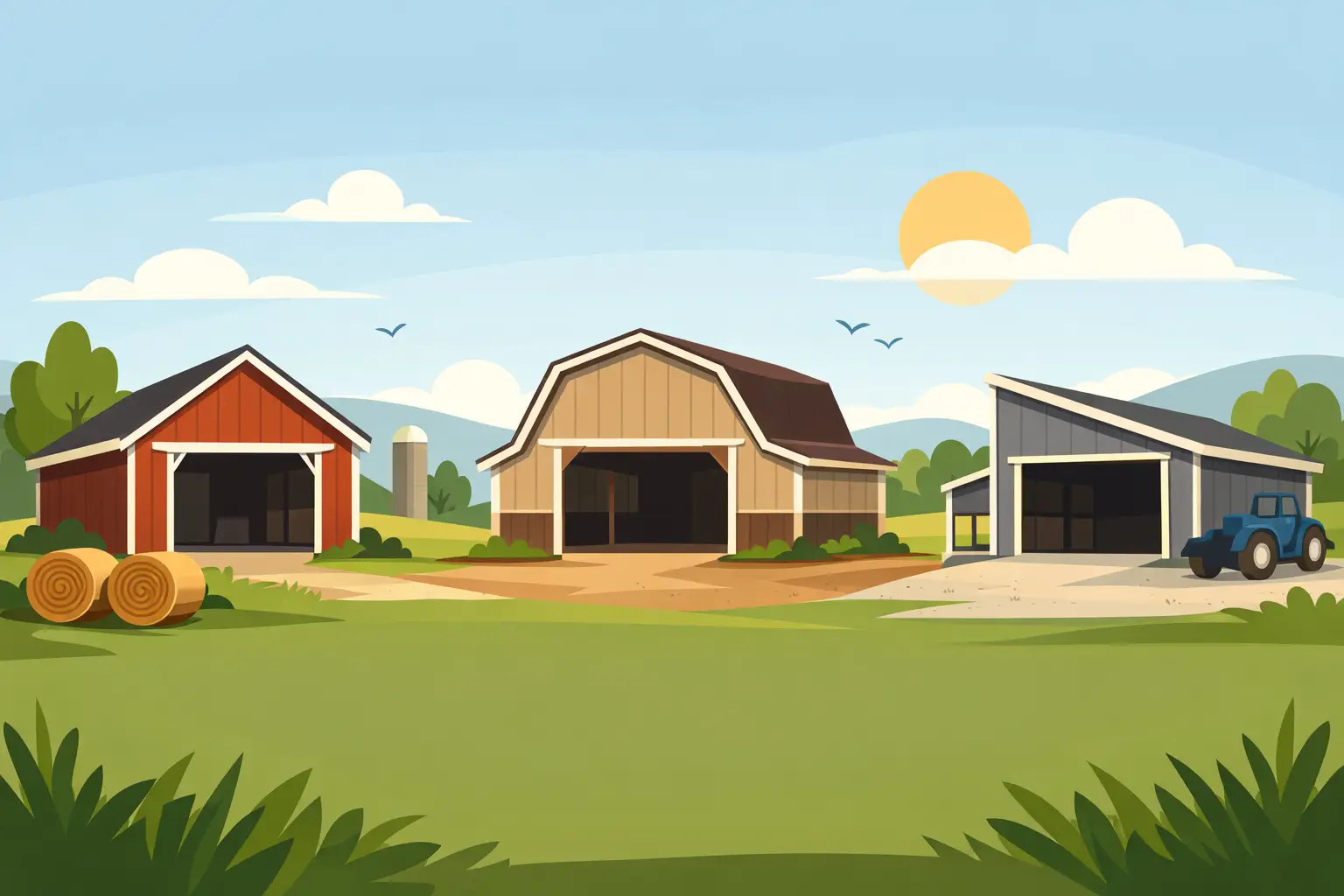
A gambrel roof has two slopes on each side and is often associated with a traditional barn look. Some buyers are drawn to it because it creates a lot of upper-level volume and has a classic agricultural appearance.
The question is whether that extra shape supports the actual use of the building. In post-frame construction, you can often achieve the needed function with a simpler roof style and a better floor plan. Gambrel roofs bring more framing complexity and more connection points, which can affect cost and detailing.
If you are trying to create a very specific look or need loft-like overhead space, a gambrel may be worth exploring. But if your main goals are durability, efficiency, and straightforward construction, it is not always the strongest value play.
Roof pitch matters as much as roof style
When people ask about the best roof style for pole barn projects, they often focus on the shape and overlook pitch. That is a mistake. The pitch affects drainage, snow shedding, building proportions, and the final appearance almost as much as the style itself.
A lower pitch can reduce overall building height and sometimes lower costs, but it may not be ideal in areas with heavier rain or snow. A steeper pitch improves runoff and can create a more traditional barn profile, though it may increase material needs and change the building’s visual scale.
This is where regional experience matters. The right pitch is not something to guess at from a photo gallery. It needs to be matched to the site, span, engineering requirements, and intended use.
How to choose the best roof style for your pole barn
Start with the building use. If the structure is mainly for equipment storage, a workshop, a garage, or a general-purpose agricultural building, a gable roof is often the strongest option. If ventilation and center height are critical, especially for horses or livestock, a monitor roof may be the better fit. If the building is smaller and you want a modern look or one-way drainage, a single-slope design could work. If appearance and upper volume are driving the project, a gambrel deserves a look, but only after you compare cost and function carefully.
Next, think about your site. Snow load, rain exposure, wind, and drainage patterns all matter. So does how the building sits near other structures, driveways, and access points. Roof style should support the property, not fight it.
Then consider what comes next. Will you add lean-tos later? Do you want insulation, finished interior space, or large overhead doors? These details can influence which roof style gives you the cleanest and most efficient design.
The best approach is to decide based on performance first and appearance second. Good-looking buildings usually come from getting the function right.
If you are still weighing options, it helps to work backward from the actual dimensions, use, and site conditions instead of trying to force a favorite roof shape into the project. That is usually how the right answer becomes obvious. And if you want a practical place to start, Locke Buildings can help you compare layouts, roof styles, and build options before you commit to a final design.