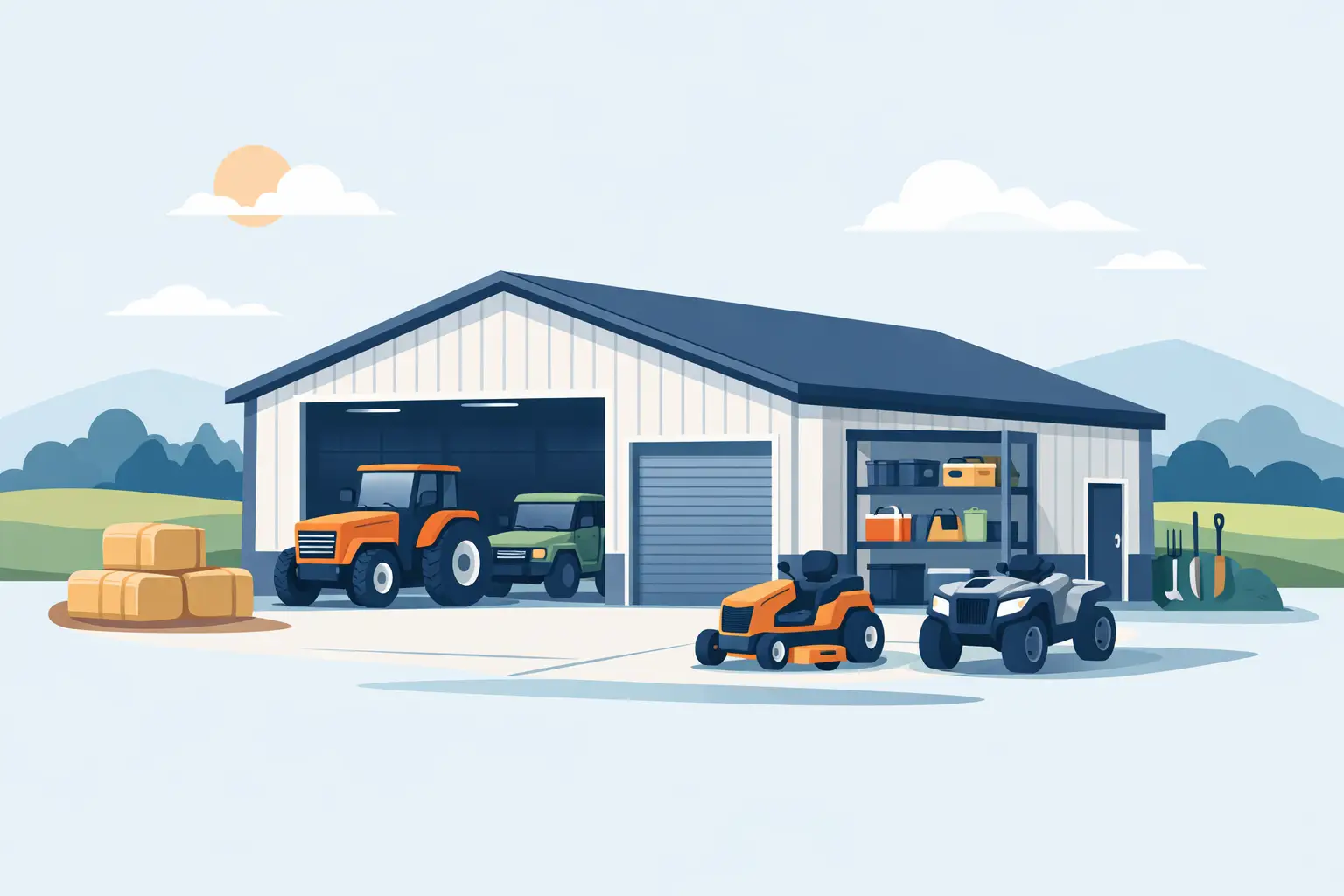
A tractor with sun-cracked seats, a trailer parked in mud, and attachments scattered between sheds usually means the same thing – storage was added late, not planned well. That is where equipment storage building kits make sense. They give property owners a faster, more flexible way to create covered space that actually fits the machines, workflows, and access needs of the site.
For farms, rural homes, and small businesses in Oregon and Washington, equipment storage is rarely one-size-fits-all. A hay producer may need wide-open bays and high clearance. A contractor may want enclosed tool storage plus a drive-through area for trailers. A homeowner with acreage may simply need one structure that keeps a tractor, UTV, implements, and seasonal materials out of the weather. The right kit starts with use, not just square footage.
What equipment storage building kits are built to solve
At the most basic level, these kits are designed to protect valuable equipment from rain, wind, UV exposure, and day-to-day wear caused by outdoor storage. But protection is only part of the job. A good storage building also improves how a property works.
When equipment is stored under cover with the right door openings and layout, loading is easier, maintenance is cleaner, and daily movement takes less time. You are not backing a trailer through tight corners, moving one machine to reach another, or leaving expensive implements outside because the building looked large enough on paper but never handled turning radius or bay spacing in real life.
Post-frame construction is a common fit for this kind of project because it allows broad clear spans, practical customization, and efficient covered space. That matters when you are storing tractors, skid steers, RVs, compact equipment, livestock gear, feed, pallets, or commercial vehicles that do not fit neatly into a standard garage footprint.
How to choose the right equipment storage building kit
The first decision is not roof color or trim. It is what needs to go inside now, and what probably will need to go inside later. Buyers often underestimate future storage demand. Equipment tends to grow over time, and once a building is in use, extra room disappears quickly.
Start with the largest pieces of equipment and work backward. Measure actual height to the top of the cab, beacon, or folded attachment. Measure width at the widest point, including mirrors or implements if they stay attached. Then think about how equipment enters and exits. A machine may technically fit through a door opening and still be frustrating to park every day.
Door configuration deserves more attention than most buyers give it. A single oversized overhead door may work for some uses, but many projects benefit from multiple openings, drive-through access, or a mix of enclosed and open bays. Sliding doors can be a good fit in some agricultural settings. Overhead doors often make more sense when security, weather seal, or frequent access matters more.
Height is another area where it pays to be realistic. If you are storing a cab tractor today but may add a dump trailer, RV, or taller equipment later, a little extra wall height can save a major headache. The same goes for length. A building that stores current equipment tightly may leave no room for workbench space, parts storage, or maneuvering room.
Open-sided, partially enclosed, or fully enclosed?
This depends on what you are storing and how you use it. Open-sided storage can be cost-effective for tractors, hay equipment, or seasonal implements where quick access matters more than full enclosure. It keeps weather off the equipment and often simplifies movement in and out.
A partially enclosed building works well when you want a secure room for tools, parts, or fuel-related storage alongside open bays. For many rural properties, this is the sweet spot. You get protected equipment parking plus a lockable area for supplies.
Fully enclosed equipment storage building kits make sense when security, weather protection, cleaner storage conditions, or mixed-use needs are priorities. If the building will hold valuable attachments, vehicles, inventory, or service space, full enclosure usually earns its keep.
The layout details that affect daily use
The best building on paper can still be awkward in practice if the layout ignores traffic flow. Think about where equipment comes from, where it goes next, and how often it moves. If the loader is used daily but the tiller comes out twice a year, they should not compete for the same access path.
Bay spacing matters. So does the apron outside the building. A generous opening is less useful if you are turning sharply on a slope or trying to line up from a narrow drive aisle. Site conditions often shape the building more than buyers expect, especially on rural properties with grade changes, drainage concerns, or existing access roads.
Interior use matters too. Some owners want pure storage. Others need room to grease equipment, swap attachments, charge batteries, or keep supplies under cover. Those uses affect building width, lighting, ventilation, insulation choices, and whether a concrete floor belongs in all or part of the structure.
Features worth planning early
Some options are much easier to get right during design than after the shell is up. These usually include door sizes and placement, eave and ridge ventilation, translucent panels or windows for daylight, overhangs, and framed openings for future expansion.
Insulation depends on use. If the building is strictly cold storage, it may not be necessary. If you are protecting sensitive materials, working inside regularly, or trying to reduce condensation, insulation becomes more relevant. There is no single right answer. It depends on what is stored, how long it stays there, and how the building will be used through wet Northwest seasons.
Why kits appeal to hands-on buyers
One reason buyers choose kits is control. Some want to handle the build themselves. Others have a trusted local contractor but want the structure designed and supplied by a company that specializes in post-frame buildings. A kit gives flexibility without forcing a one-path purchase.
That flexibility only works if the package is scoped correctly. Buyers need confidence that the design, materials, and options actually fit the intended use. Cheap square footage is not a win if the doors are wrong, the clearance is short, or the building is undersized for the equipment it is supposed to protect.
This is where a specialist matters. A provider focused on post-frame buildings can help identify the details that affect price, function, and constructability before the order is placed. That is a much better time to solve problems than after posts are set.
Cost depends on more than size
Most buyers start by asking how much a building costs per square foot. That is understandable, but it only tells part of the story. Two equipment storage buildings with the same footprint can price very differently based on height, roof style, door package, site access, engineering needs, and how enclosed the structure is.
A simple open storage building may serve one property perfectly. Another site may require larger openings, heavier usage considerations, upgraded materials, or enclosed space for security. Neither choice is automatically better. The right building is the one that supports the way the property actually operates.
It also helps to think about cost over time. Leaving equipment outside may save money up front, but weather exposure shortens finish life, damages seats and controls, increases maintenance, and creates ongoing frustration. A properly planned building can reduce that wear while making day-to-day work easier.
Getting a quote that reflects the real project
Accurate quoting starts with clear information. Dimensions matter, but intended use matters just as much. If you want pricing that is worth comparing, be ready to share what will be stored, desired door sizes, preferred roof style, whether you want open or enclosed walls, and who will handle construction.
Photos of the site, rough sketches, or uploaded plans can speed up the process and reduce guesswork. If you already know the equipment list, share it. If you are between two sizes, say that too. Good quoting is not just about assigning a number. It is about narrowing in on a building that works.
For buyers in Oregon and Washington, regional experience also matters. Snow load, rainfall, site drainage, and local building expectations can shape the right design. A practical quote should account for those realities, not treat every building like it belongs on the same flat lot in the same climate.
Locke Buildings works with both kit buyers and full-build customers, which is useful for owners who are still deciding how they want to move forward. Some are ready to self-build. Some have a contractor lined up. Some would rather hand off the whole job. The right path depends on budget, schedule, skill, and how involved you want to be.
If you are planning equipment storage, think less about buying a generic shell and more about solving the actual storage problem on your property. The right building should protect your equipment, fit your workflow, and still make sense five years from now when the lineup of machines has changed.