
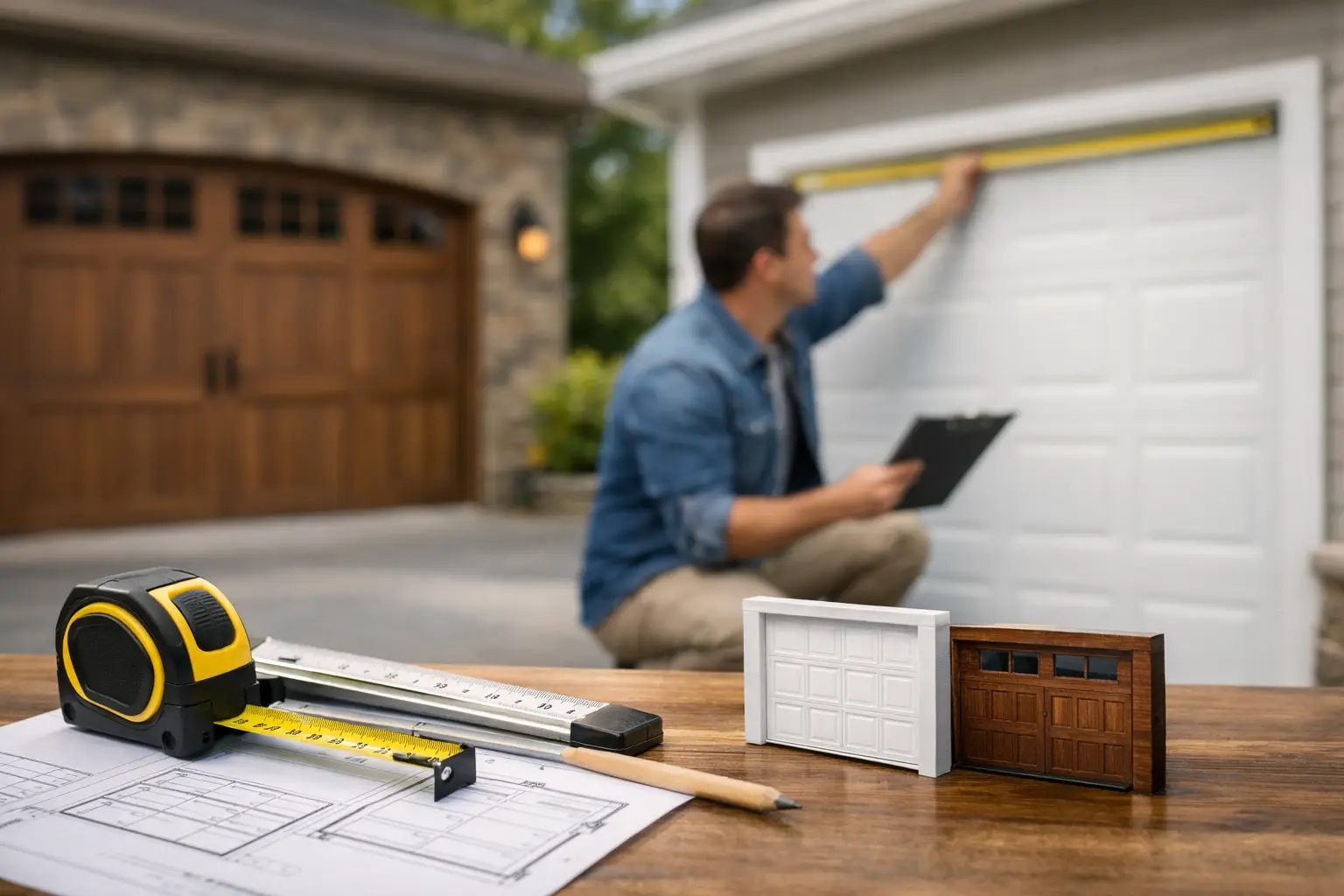
A garage door that looks fine on paper can become a daily headache once the building goes up. We see it most often when a truck mirror clips the jamb, a trailer barely clears the header, or a customer realizes too late that the door works for the vehicle but not for the way they actually use the space. That is why knowing how to choose garage door size starts with more than the vehicle itself.
The right size depends on three things working together: what needs to pass through the opening, how often it will be used, and how the rest of the building is laid out. If you are planning a garage, shop, storage building, or post-frame structure, the door should be sized as part of the whole design – not treated like a last-minute add-on.
How to choose garage door size for real-world use
Most sizing mistakes happen because people measure the vehicle and stop there. That is only the starting point. You need clearance for mirrors, roof racks, ladders, snow buildup, approach angle, and plain human error after a long day.
For a standard passenger vehicle, a single garage door is often 8 to 10 feet wide and 7 to 8 feet tall. For many homeowners, a 9-foot-wide by 7-foot-tall door works well for a car, SUV, or half-ton pickup. If you are parking larger trucks or want easier entry without hugging one side, 10 feet wide can make daily use much more comfortable.
For a two-car garage, 16 feet wide is common, but common does not always mean ideal. A 16-foot door can work well for two standard vehicles, but if you drive full-size pickups, use roof cargo boxes, or want less stress backing in, an 18-foot door may be the better choice. The extra width does not sound dramatic until you are using it every day.
Height deserves just as much attention. A 7-foot-tall door may be fine for many vehicles, but taller SUVs, lifted pickups, contractor vans, and utility trailers can quickly push past that limit. If there is any chance your needs will grow, stepping up to 8 feet tall is often a smart move.
Start with what will go through the opening
Before you settle on a size, list every vehicle and piece of equipment that may use that door over the life of the building. That includes current vehicles, likely upgrades, lawn equipment, side-by-sides, compact tractors, boats, enclosed trailers, and RVs.
Measure the widest and tallest item at its true operating size. That means mirrors extended, accessories installed, and tires at normal pressure. If a truck has a ladder rack or a tractor has a cab, measure to the highest fixed point. Then add operating clearance. In practical terms, a few extra inches is rarely enough. You want room to enter without creeping through the opening every time.
A good rule is to size the width so the vehicle has comfortable side clearance on both sides, not just technical clearance. The same goes for height. You do not want the top of the opening close enough to make every entry feel risky.
Width matters more than most people expect
When people ask how to choose garage door size, they often focus on height because it feels more obvious. In everyday use, width is just as important. Narrow openings slow you down, reduce visibility when backing in, and leave little room for error.
A single wide door also behaves differently from two separate doors. One large opening can make parking easier and gives you flexibility for different vehicle positions inside the building. Two separate doors create defined bays and may work better if you want more wall space between openings or prefer independent access.
Neither option is automatically better. It depends on how you use the building. If one bay is for a vehicle and the other is for storage or a workshop, separate doors may be more practical. If you want maximum maneuvering room, one wider door may serve you better.
Height should match today and tomorrow
Door height is where future planning pays off. A homeowner may only need a door for a standard pickup today, then buy a taller camper trailer, work van, or side-by-side tomorrow. Agricultural and rural properties in Oregon and Washington often need more flexibility than suburban garages do.
If you are building a shop or multipurpose garage, think beyond the primary vehicle. Will you ever pull in a tractor with a rollover bar, a boat on a trailer, or a service body truck? If yes, sizing up now is usually cheaper and easier than trying to rework the opening later.
This is also where the building structure matters. The garage door opening is only part of the equation. Header height, truss design, wall height, and the door track system all affect usable clearance. A door listed at a certain height does not always mean you will have that exact amount of clear, practical space in every condition.
Match the door size to the building layout
A garage door should not be chosen in isolation. The building width, depth, interior storage plan, and entry path all affect what size makes sense.
For example, a deep garage may allow easy straight-in parking even with a tighter opening. A shallow building with tools or shelving near the front may require more door width so drivers can angle in without fighting the walls. If you are placing workbenches, tack areas, feed storage, or mechanical equipment inside, those uses can change the ideal door position and size.
Approach matters too. If the driveway comes in straight, a narrower door may still be manageable. If the approach requires turning, backing around a corner, or entering on a slope, more width and height can save frustration. That is especially true for trailers.
Common garage door sizes and when they fit
There is no one-size-fits-all answer, but a few common ranges help frame the decision.
A 9-by-7 door is a common fit for one standard vehicle. A 10-by-8 door gives more flexibility for full-size pickups and taller vehicles. A 16-by-7 or 16-by-8 double door can work for two vehicles, while an 18-foot-wide option gives more breathing room. For shops, equipment storage, and larger rural properties, wider and taller openings are often the better long-term choice.
For RVs, enclosed trailers, and equipment, standard residential sizes usually do not apply. These projects often need significantly taller doors, and the wall height must be designed around that from the start.
Don’t forget headroom, side room, and clearance
Even a correctly sized opening can become a problem if the surrounding space is too tight. Overhead doors need room for tracks, springs, openers, and framing. You also need enough side room for installation and operation.
This is one reason early planning matters so much. In post-frame construction, door placement and structural design should be coordinated from the beginning. If you wait until late in the process, your choices can narrow fast.
At Locke Buildings, this is exactly the kind of issue we help customers sort through before they build. It is easier to adjust a plan than to fix a finished opening.
Think about use frequency, not just fit
A door used once a month for equipment storage can be tighter than a door used six times a day for commuting. Daily-use doors should be more forgiving. You want easy entry in rain, mud, low light, and rushed conditions.
If the opening serves a workshop, consider what happens when the space is active. Tools, hoses, materials, and people all create extra motion around the doorway. A little more width often improves safety and convenience more than people expect.
The best choice usually includes a margin
The safest answer to how to choose garage door size is this: choose the smallest door that fits comfortably with room for the way you actually live and work, then consider whether one step larger will serve you better over time.
That does not mean oversizing every opening. Larger doors affect cost, wall space, structural design, and sometimes appearance. But undersizing has a cost too, and it shows up every time you pull in.
If you are planning a garage, shop, or post-frame building, size the door around real use, future flexibility, and the building as a whole. A few extra feet in the right place can make the entire structure work better for years.