A low quote can look great until you realize it leaves out half the building.
That is the real challenge in how to compare pole building quotes. Most buyers are not looking at apples to apples. One quote may include engineered plans, delivery, labor, trim, doors, site assumptions, and warranty coverage. Another may show a lower number simply because several of those items are missing. If you compare only the bottom-line price, you can end up paying more later or getting a building that does not match your needs.
For property owners in Oregon and Washington, that matters even more. Snow load, wind exposure, soil conditions, permitting requirements, and intended use all affect what should be in the quote. A barn, shop, garage, riding arena, or commercial structure may look similar on paper, but the details behind the pricing are what determine long-term value.
Start by making sure the scope is the same
Before you compare prices, compare the building itself. If one quote is for a 30x40x12 structure with one overhead door, basic wall steel, and no insulation, and another is for a 30x40x14 structure with upgraded doors and roof insulation, the numbers should not match.
Check the core dimensions first. Width, length, and height all need to be identical. Then look at roof style, pitch, overhangs, enclosed or open sides, and whether the building is fully engineered for your location. Small design changes can move the price more than many buyers expect.
This is also the point where intended use matters. A hay barn, machine shed, hobby shop, and barndominium shell are not quoted the same way because they are not built for the same job. If you told one company the building is for equipment storage and told another it will eventually become a finished workspace, their framing and recommendations may be different from the start.
How to compare pole building quotes line by line
The best way to compare pole building quotes is to break each one into categories and read past the total.
Start with structure. Look at post size and spacing, truss design, framing package, purlins, girts, and steel specifications. A quote that uses lighter materials or wider spacing may cost less up front, but it may not offer the same strength or long-term performance.
Then review the exterior package. Roofing and siding gauge, paint system, trim package, soffits, overhangs, ridge vents, and closures should all be listed clearly. If one quote says only “metal building package” and another spells out every component, the more detailed quote is easier to trust because you can see what is actually included.
Doors and windows deserve close attention. A building with one manual overhead door is not equivalent to a building with insulated overhead doors, commercial-grade sliders, entry doors, window packages, and upgraded hardware. Openings are often where quote differences show up fast.
Labor is another major separator. Some quotes are material-only kit prices. Others include full construction. Neither approach is automatically better. It depends on whether you plan to self-build, hire your own crew, or work with a turnkey contractor. What matters is knowing which path each quote covers.
Watch for missing items that change the real cost
A quote can be technically accurate and still leave out major project costs. That is where buyers get surprised.
Concrete is a common example. Many building quotes do not include slabs, flatwork, thickened edges, or foundation prep unless those items are specifically requested. The same goes for excavation, grading, fill, drainage work, utility trenching, and retaining needs. If your site is sloped or access is tight, those conditions can affect the final cost even if the building package looks straightforward.
Permitting and engineering should also be clear. In some cases, engineered plans are included. In others, they are additional. Permit fees themselves are usually separate, but the quote should state what documentation is provided for the permit process.
Delivery, equipment, travel, and sales tax should never be assumed. If a builder services rural parts of Oregon or Washington, delivery distance and crane or lift needs can affect the total. Ask whether the quote is fully loaded or whether those costs are still to be determined.
Ask what assumptions the quote is based on
Every quote is built on assumptions. Good quoting makes those assumptions visible.
Ask whether the price assumes a level site, standard soil, easy truck access, and normal scheduling conditions. If your property has soft ground, narrow access roads, tree clearing needs, or weather-sensitive timing, those factors can change labor and equipment costs.
This is especially important if you are comparing a quick online price to a quote built around your actual site and plans. A rough budget number has value at the early stage, but it should not be treated the same as a quote based on real project information.
If you have a sketch, upload it. If you know your door sizes, eave height, and intended use, share that up front. Better inputs lead to better quotes, and better quotes are much easier to compare.
Compare quality, not just price
When buyers ask how to compare pole building quotes, they often mean how to tell whether the cheapest price is risky. The answer is usually in the specifications.
Lower pricing may come from legitimate efficiencies. A specialist with strong supplier relationships, in-house systems, and regional experience may price a project competitively without cutting corners. But lower pricing can also come from omitted scope, downgraded materials, vague allowances, or unrealistic labor assumptions.
That is why detail matters. If one company clearly explains post embedment, truss loading, steel grade, door brands, trim package, and installation scope, and another gives only a short lump sum, the first quote is giving you more to evaluate.
You should also consider fit for purpose. A basic farm storage building may be exactly right for one property and completely wrong for a heated workshop or commercial use. Paying less for the wrong building is not savings.
Evaluate the builder or supplier behind the quote
A pole building quote is only as good as the team standing behind it.
Look at specialization first. A contractor or supplier that works in post-frame buildings every day is usually better equipped to guide design choices, identify cost drivers, and avoid scope gaps. That matters when you are deciding between kit options, custom features, or full construction.
Experience in your region matters too. Oregon and Washington projects can involve coastal moisture, valley winds, mountain snow loads, and rural site conditions. A company with local experience is more likely to quote according to real conditions rather than generic assumptions.
Communication is another practical test. If questions about scope are answered clearly and promptly during quoting, that usually points to a better project process later. If getting a straight answer is difficult before the sale, it rarely gets easier after you commit.
Know when a quote is not actually comparable
Sometimes two quotes should not be compared at all.
If one is for a DIY-ready building kit and the other is for design, materials, labor, and project coordination, they serve different buyers. If one includes only a shell and the other includes insulation, interior framing prep, and upgraded access points, the totals will naturally be far apart.
That does not make one wrong. It just means you need to decide which delivery path fits your project. Some owners want a complete build. Others want the flexibility of a kit and their own installer. The right comparison starts after that decision is made.
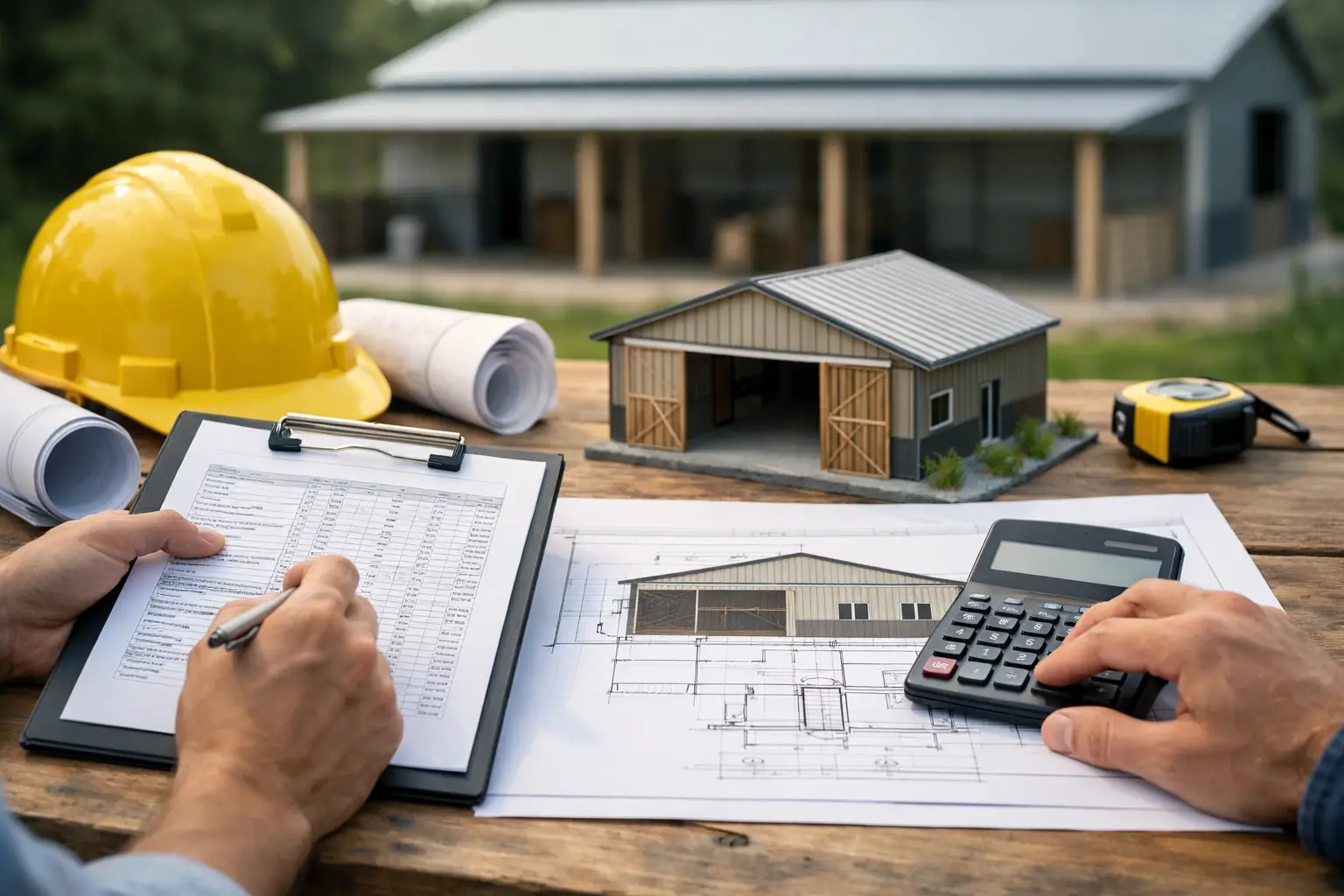
For that reason, many buyers benefit from creating a simple comparison sheet with matching categories for dimensions, structural specs, exterior finish, openings, engineering, labor, delivery, exclusions, and warranty. Once those rows are aligned, the quote differences become easier to understand.
Use the quote process to improve the project
The quote stage is not just about shopping price. It is where the building gets defined.
If one proposal raises questions about door placement, ceiling height, roof style, or future use, that is useful information. It may help you avoid ordering a building that is too short for equipment, poorly laid out for workflow, or underbuilt for later upgrades.
A good quote should help you make decisions, not just present a number. That is where working with a specialist pays off. At Locke Buildings, that practical guidance is a big part of the process because the right quote starts with the right building.
The best choice is rarely the one with the lowest number on page one. It is the quote that clearly matches your use, your site, and your build path with the fewest surprises later. If you slow down long enough to compare the scope, assumptions, and quality behind the price, you put yourself in a much stronger position to build once and build right.