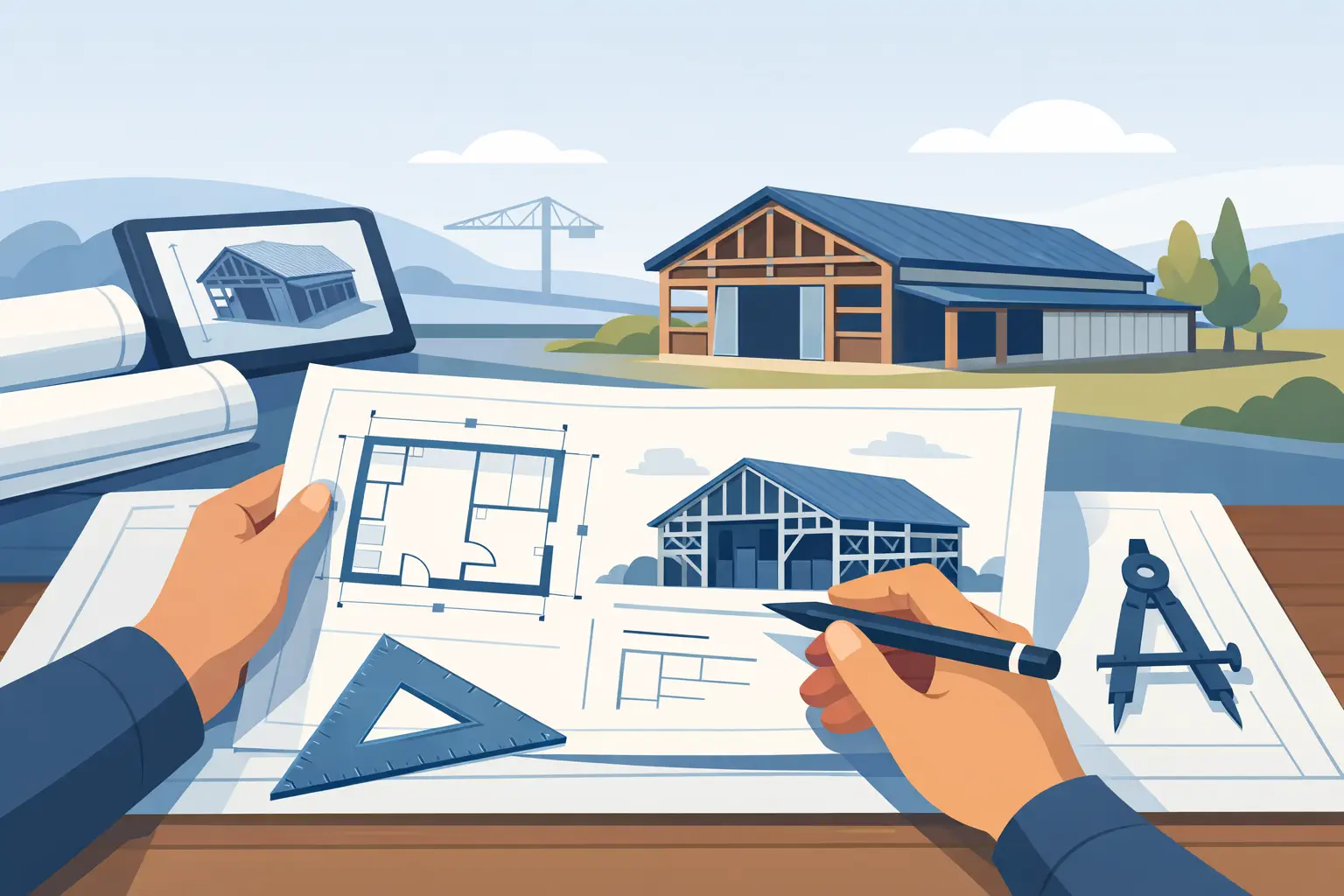
A good set of post frame building plans can save you from the two mistakes that cost the most money – building too small, or building the wrong layout for how you actually work.
That happens more often than most buyers expect. A building can look right on paper and still miss the mark once trucks need to turn, horses need safe circulation, equipment needs taller doors, or a shop needs more wall height than originally planned. Plans are not just a formality. They are where function gets decided.
What post frame building plans should really do
The best post frame building plans do more than show a roofline and a footprint. They should help answer practical questions before materials are ordered or crews show up. If the building is for hay storage, a horse barn, a workshop, a garage, or a commercial use, the plan needs to reflect that purpose from the start.
That means the plan should show how the building will be used day to day. Door size, door placement, bay spacing, overhangs, interior clearance, and traffic flow all matter. A riding arena has different planning needs than a farm shop. A barndominium shell has different requirements than a storage building. Even two buildings with the same dimensions can perform very differently depending on layout.
A clear plan also helps with pricing accuracy. When a quote is based on real dimensions, roof style, openings, and structural requirements, there is less guesswork. That matters whether you want a complete build, a material package, or a kit you plan to erect yourself.
The key parts of post frame building plans
Most buyers first look at the overall size, and that makes sense. Width, length, and height set the basic envelope. But those numbers only tell part of the story.
The site plan shows where the building sits on the property. This matters for access, slope, drainage, setbacks, and orientation. In Oregon and Washington especially, site conditions can affect how practical the build will be and what prep work is needed before construction starts.
The floor plan shows the building from above. This is where you can see stall layouts, tack rooms, shop space, storage areas, office buildouts, or open-span working areas. If you are planning equipment storage, this view should make it easy to test whether your machinery, trailers, or RVs actually fit with room to move.
The elevations show the outside faces of the building. These drawings help confirm roof pitch, wall height, overhangs, windows, and door placement. They also catch common problems early. A door may technically fit in the wall, for example, but still feel awkward in relation to driveway approach or interior work zones.
The structural pages are where engineering details come into play. These sections cover post spacing, truss design, bracing, loads, connections, and foundation requirements. Not every owner wants to study these pages in detail, but they matter because they affect durability, code compliance, and long-term performance.
Start with use, not just size
When customers ask for pricing, they often start by saying they want a 30×40, 40×60, or 60×120 building. That is a useful starting point, but it is not enough to create the right plan.
A better approach is to define the building’s job first. Will it house tractors and implements? Will it be a shop with welding, woodworking, or vehicle lifts? Will horses move through it daily? Will it need enclosed storage plus a lean-to? Will it eventually become part of a larger property improvement plan?
Those answers shape the plan far more than square footage alone. A building meant for livestock needs ventilation and safe movement. A workshop may need insulation, higher wall height, and better natural light. A commercial building may need office areas, larger overhead doors, and stricter design criteria. The right plan starts with use and then builds dimensions around it.
The layout decisions that affect function most
Some of the most expensive changes happen after a buyer realizes the plan did not account for how the building will actually be used.
Door openings are one of the biggest examples. Width is important, but height is often where problems show up. Equipment cabs, RV air conditioners, lifted trucks, and trailers can all require more clearance than expected. Placement matters too. A large overhead door centered on a wall may look balanced on paper, but it may not work well with the site approach or the interior layout.
Wall height is another detail buyers sometimes undershoot. Extra height can improve storage flexibility, future interior buildout options, and door sizing. But more height also changes material cost and may affect appearance or permitting considerations. There is no universal right answer. It depends on use.
Roof style matters for both performance and purpose. A gable roof may be the straightforward choice for many shops, barns, and garages. A monitor-style or custom configuration may make sense for larger equestrian or specialty uses. The plan should match the building’s function without overcomplicating the project.
Interior clear-span needs should also be settled early. If you need open maneuvering room for equipment, arena use, or shop operations, interior posts can become a problem. On the other hand, in some layouts, posts may be workable if they reduce cost or support partitioned spaces.
Engineering, code, and regional conditions
Post frame buildings are versatile, but they are not one-size-fits-all. Loads, site exposure, snow, wind, and local code requirements all influence the final plans.
That is why buyers should be careful about using generic drawings pulled from a broad national source. A plan that looks acceptable in another region may not line up with local conditions or permitting expectations in the Pacific Northwest. Snow load, wind exposure, and site specifics need to be addressed correctly.
This is also where experienced design support matters. A plan should not only reflect what you want to build. It should reflect what can be built correctly on your property. If grading, drainage, access, or setbacks create limits, those should be dealt with before the project moves too far.
Plans for a kit build versus a turnkey project
Not every customer needs the same level of support from the plans.
If you are buying a building kit or supplying your own labor, the plans need to be clear enough to guide ordering, coordination, and construction. You will want dimensions, framing details, openings, and structural information that reduce field confusion. The cleaner the plans, the smoother the build.
If you are hiring a contractor for a full-service build, the plans still matter just as much, but for a different reason. They become the shared reference point for scope, pricing, and execution. They help prevent misunderstandings about what is included and how the finished building is supposed to perform.
In either case, vague plans usually lead to delays, change orders, or compromises.
What to review before approving a plan
Before signing off on any plan, slow down and walk through real use cases. Picture the truck backing in. Picture the hay delivery. Picture the horse trailer turning around. Picture the lift, the workbench, the tack room, or the future office space.
Look closely at door swing, overhead door placement, window location, and circulation paths. Check clearances at the eaves and inside the structure. Review whether the site layout makes sense in wet weather, not just on a dry day. If the building may need to serve a second purpose later, ask whether the current plan leaves room for that.
This is also the right time to confirm details that affect budget. Roof style, overhangs, insulation prep, interior liners, enclosed versus open bays, and upgraded openings all change cost. None of those are bad choices. They just need to be intentional.
For buyers in Oregon and Washington, working with a specialist who understands regional conditions and post-frame design can shorten the path from rough idea to workable plan. At Locke Buildings, that process is built around helping customers define dimensions, layout, features, and build approach clearly before the project moves forward.
A building plan should give you confidence, not just paperwork. If it shows how the structure will work on your property, for your equipment, and for the way you actually use the space, you are much more likely to be satisfied years after the build is finished.