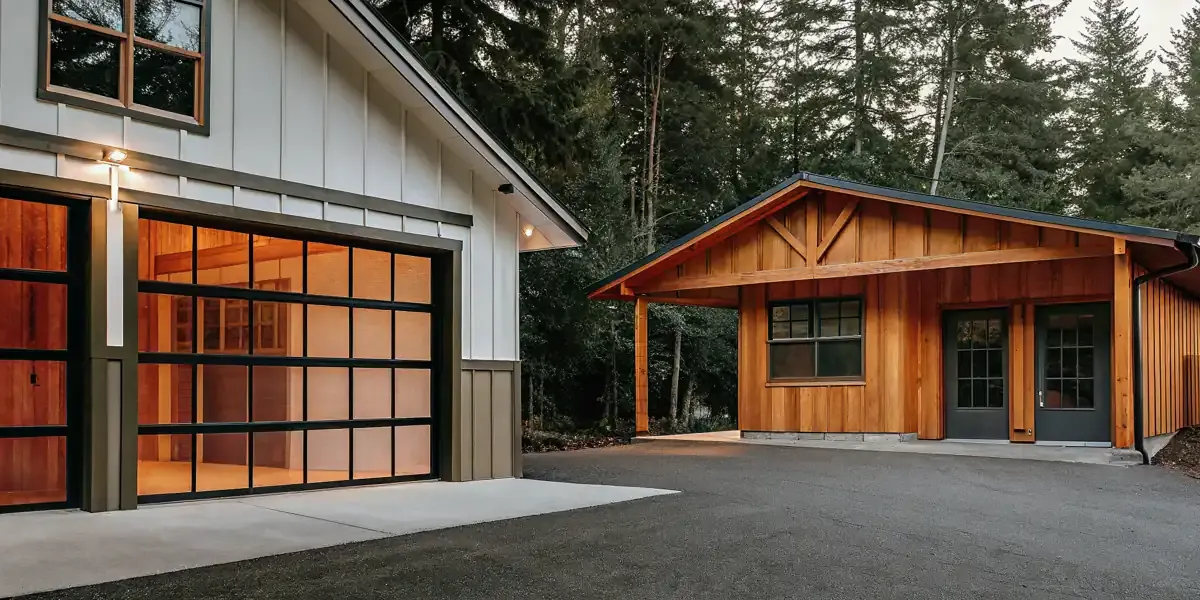
Post frame vs stick frame construction differs mainly in how each system carries structural loads. For Oregon and Washington property owners, post frame often suits wide, open shops, barns, arenas, and garages, while stick frame often suits homes and room-heavy finished spaces.
Design your pole building in 3D and submit it for a project-specific quote.
Post-frame buildings use large, widely spaced columns connected by roof trusses, girts, and purlins. Stick-frame buildings use closely spaced wall studs that sit on a continuous foundation. Neither method is always better. The best choice depends on span, site conditions, desired finishes, local code, budget, and the team designing the structure.
This comparison explains the tradeoffs that matter before you request plans or pricing. For broader regional context, read The Complete Guide to Post-Frame Construction in Oregon and Washington, then review what a post-frame building is.
Post frame vs stick frame construction: the core difference
Bottom line: Post frame concentrates loads through widely spaced columns, while stick frame distributes loads through closely spaced stud walls and a continuous foundation.
Both methods create durable wood-framed buildings, but they send roof and wall loads to the ground in different ways. That structural path affects the foundation, interior layout, construction sequence, and future options.
How post frame carries loads
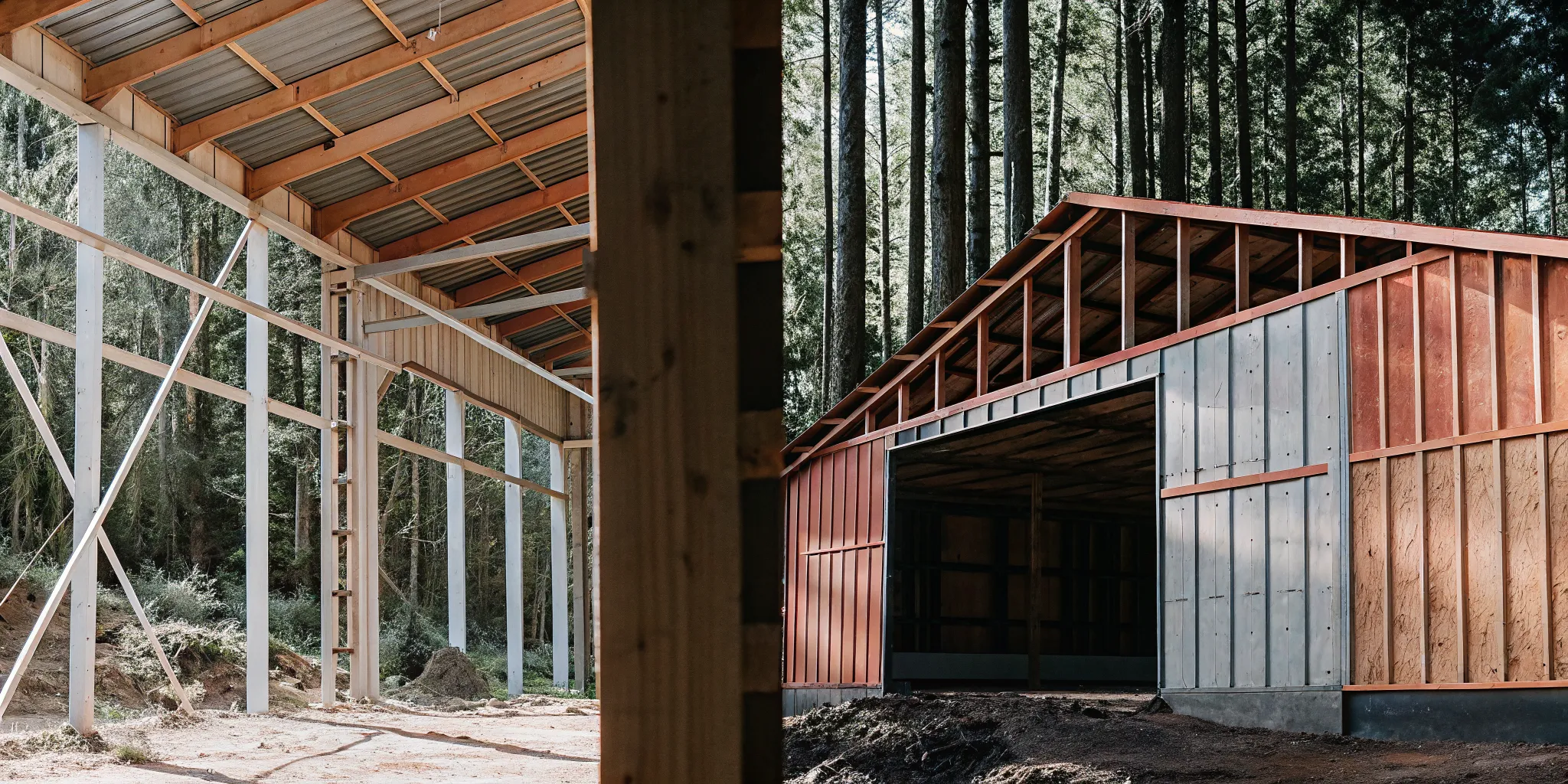
A post-frame building uses large wood columns set at wider intervals. Those columns support engineered roof trusses and transfer loads toward the foundation system. Horizontal girts support the wall cladding, while roof purlins support the roof material.
Because the main columns can be spaced farther apart, post frame can create broad clear-span areas with few interior supports. That is useful when a shop needs room for vehicles, a barn needs flexible stalls, or an arena needs an open floor.
How stick frame carries loads
Stick framing uses many smaller studs placed close together. The framed walls support the roof and typically sit on a continuous foundation or slab edge designed for the project. The method is familiar to many residential trades and works naturally with conventional room layouts.
Closely spaced studs create many ready-made wall cavities for insulation, plumbing, and wiring. That can simplify planning for a home or another building with many finished interior rooms.
| Decision factor | Post frame | Stick frame |
|---|---|---|
| Main supports | Large, widely spaced columns | Closely spaced wall studs |
| Foundation approach | Column-based system designed for the site | Usually a continuous foundation system |
| Open interior space | Well suited to broad clear spans | May use interior bearing walls or added framing |
| Common fit | Shops, barns, arenas, garages, storage, commercial space | Homes, additions, and room-heavy finished space |
Why the difference matters
The frame does not decide every finish. A post-frame building can have an attractive exterior and a fully finished interior. A stick-frame building can also create open areas when it is engineered for them. The real question is which structural system reaches the desired result with less complexity.
Before choosing, define door sizes, ceiling height, clear-span needs, equipment paths, rooms, and future expansion. Those choices give a designer better information than square footage alone. Locke’s pole building construction basics can help owners prepare for that first planning conversation.
Cost comparison: which is cheaper to build?
Bottom line: Post frame can reduce structural and foundation complexity for large open buildings, but total cost depends on the complete scope, site, and finishes.
Post frame can be a cost-effective option, especially for a large, open building, but no framing method is automatically cheaper on every property. A useful comparison looks at the full project rather than the framing package alone.
Foundation and framing costs
A post-frame design may reduce the amount of continuous foundation work required because its primary loads move through widely spaced columns. It may also use fewer framing pieces for a broad open shell. Those advantages can reduce labor and material complexity on a suitable site.
Stick framing uses many studs and often pairs with a continuous foundation. That can add work for a large utility building. Yet it may be efficient for a small finished structure when local crews and trades regularly use that system.
Costs beyond the structural shell
The shell is only one part of a usable building. Site access, grading, drainage, excavation, concrete floors, insulation, doors, windows, utilities, interior finishes, and permit needs can change the total sharply. A low shell price can become a poor comparison if it leaves out key work.
- Large overhead doors may require added engineering and framing.
- A sloped or wet site may need more preparation and drainage work.
- Finished offices, bathrooms, or living areas add mechanical and interior costs.
- Long spans and high snow loads can change structural requirements.
- Material delivery and construction access affect both schedules and labor.
Compare equivalent scopes
Ask each builder or supplier to price the same size, use, finish level, openings, and site assumptions. Confirm whether the proposal includes engineering, permits, site work, concrete, labor, and installation. Locke’s published pole barn cost guide for Oregon and post-frame building cost guide explain common cost drivers.
Locke Buildings offers full-service design-build work, DIY pole building kits, and contractor supply options. Kit prices cover material-package examples and do not include site preparation, concrete, labor, or installation. Turnkey pricing depends on the actual project, so a detailed quote is the soundest way to compare options.
How do strength and durability compare?
Bottom line: Both methods can provide long service life when engineering, connections, drainage, materials, and maintenance match the site.
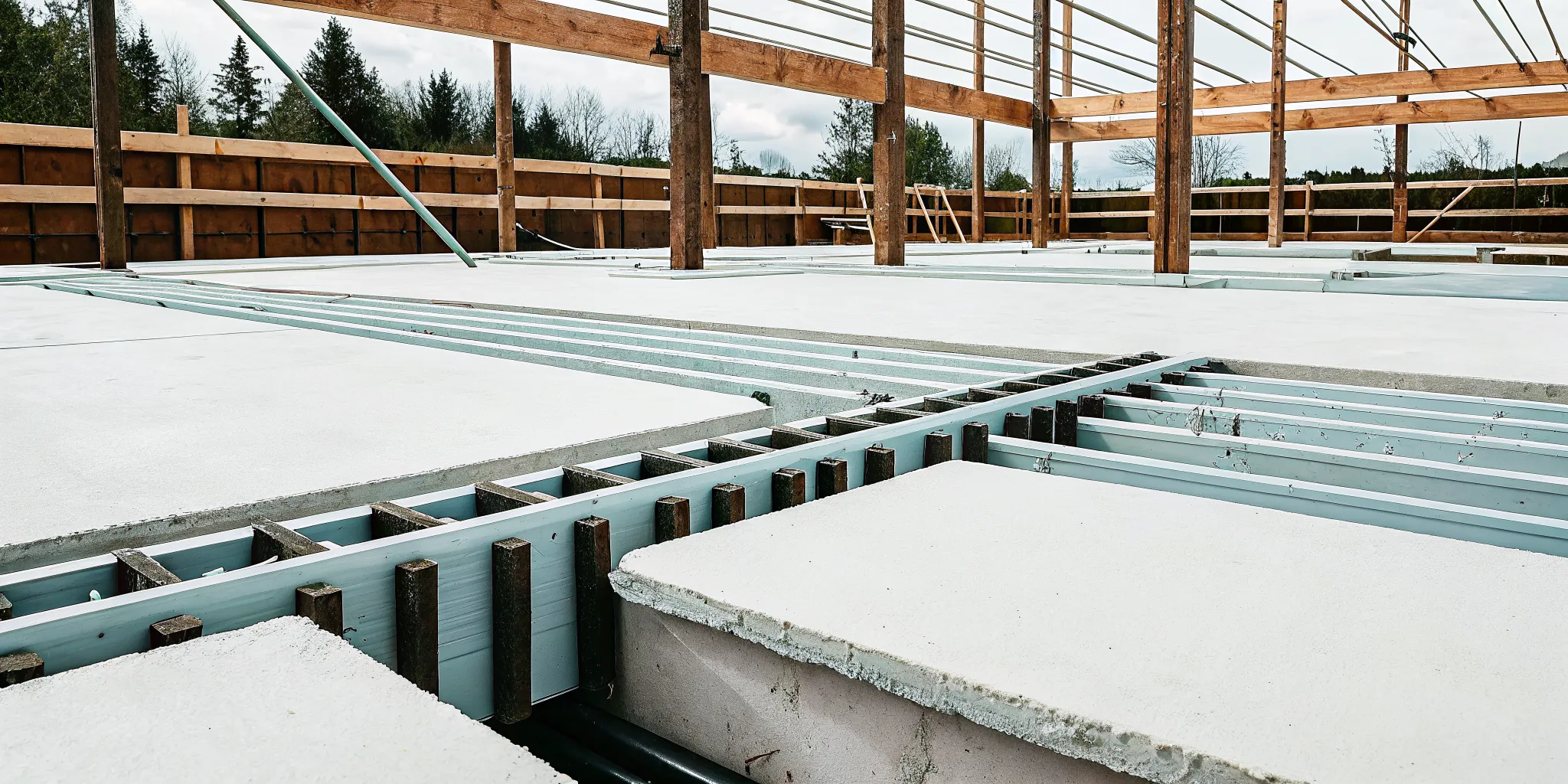
Both post-frame and stick-frame buildings can be strong, durable, and code compliant when they are designed for the site and built correctly. Framing type alone does not determine performance. Engineering, materials, drainage, workmanship, and upkeep matter more than broad claims that one system always wins.
Loads must match the property
Oregon and Washington properties can face very different wind, snow, soil, seismic, and exposure conditions. A building near the coast has different concerns than one in a mountain snow zone. The plans must account for the actual location, building dimensions, openings, and intended use.
Post-frame columns, trusses, girts, purlins, bracing, and cladding work as a system to move loads. Stick-frame studs, sheathing, roof framing, connectors, and foundation also work together. In either method, changing a door opening or removing a wall without reviewing the structure can affect performance.
Moisture control protects the frame
Long service life starts with keeping water where it belongs. Good grading directs runoff away from the building. Correct flashing protects doors, windows, roof edges, and other transitions. Ventilation and insulation details also help manage condensation inside the building.
For post-frame projects, the column and foundation detail must suit the plans and site. For stick-frame projects, the continuous foundation and framed walls need the same care around drainage and water entry. Durable materials cannot compensate for poor site drainage or an unsealed opening.
Maintenance remains essential
Owners should inspect roof and wall panels, fasteners, sealants, gutters, drainage paths, doors, and any signs of moisture. Small repairs are easier to manage before water reaches structural parts. The best maintenance plan reflects the cladding, exposure, and use of the building.
Clear spans are a practical strength of post frame for barns, shops, and arenas because the layout can reduce interior supports. Stick framing can be engineered for open space as well, but it may need other structural components. A qualified designer can explain which approach meets the goal without adding needless complexity.
Permitting and code compliance in Oregon and Washington
Bottom line: Both framing systems require project-specific review by the local jurisdiction, and neither label creates an automatic permit exemption.
Permits and code requirements apply to both framing methods. A post-frame building is not exempt simply because it is called a pole barn, and a stick-frame design is not automatically approved because it resembles a house. The local authority having jurisdiction makes the final determination.
Start with the local jurisdiction
Requirements can vary by city, county, zoning district, use, and property. Before final design, confirm setbacks, height limits, lot coverage, access, utility rules, and whether the proposed use is allowed. Ask what plans, calculations, and site information the permit office expects.
- Define the building’s use, size, height, openings, and planned utilities.
- Confirm zoning, setbacks, access, and land-use constraints with the local office.
- Gather site details, including slope, drainage, soil concerns, and exposure.
- Have the structure designed for local wind, snow, seismic, and other loads.
- Submit the required plans and respond to review questions before construction.
Engineered plans reduce uncertainty
A complete plan set helps reviewers understand how loads move through the building and into the ground. It should also show key connections, openings, bracing, and foundation details. The same principle applies whether the structure uses posts or stud walls.
Large doors, tall walls, attached lean-tos, mezzanines, and future solar panels can change structural needs. Share those plans early. Locke’s post-frame building permit guide can help you prepare questions for the local office. Adding features after design or construction starts can lead to revisions, delays, and extra cost.
Regional knowledge helps planning
A builder familiar with Oregon and Washington can help identify questions to raise before the design is locked. That does not guarantee permit approval, but it can produce a more complete submission and reduce avoidable surprises.
Locke Buildings concentrates full construction service from Centralia, Washington, to Salem, Oregon. DIY kits can be delivered throughout Oregon and Washington. Property owners outside the full-service area can still discuss a kit or contractor supply path that fits their location and permitting needs.
Which building method fits your intended use?
Bottom line: Choose the system that supports the building’s daily activities, required openings, room layout, and future expansion plans.
The strongest reason to choose a framing system is that it supports how the building will work every day. Start with the activities, vehicles, equipment, storage, rooms, and future changes the structure must handle.
Wide open working space
Post frame is often a strong fit for agricultural buildings, equipment storage, riding arenas, workshops, large garages, and commercial spaces. Explore Locke’s pole building options and post-frame pole building services to compare common project paths. Its widely spaced main supports can make it easier to plan broad, open interiors. Owners gain room to move trailers, tractors, lifts, or materials without working around many columns.
Large openings and tall ceilings can also suit post frame, but they still need to be designed into the structure. Door placement, eave height, truss layout, and equipment clearance should be decided together. A few early measurements can prevent an expensive mismatch later.
Finished and room-heavy space
Stick framing is familiar for homes and additions because closely spaced studs align naturally with conventional interior walls and finishes. It can be a practical choice when a project contains many smaller rooms, complex tie-ins to an existing house, or details that local residential trades use every day.
Post-frame buildings can also include finished offices, hobby rooms, bathrooms, or living areas. Those spaces require thoughtful insulation, air sealing, moisture control, utilities, and interior framing. The exterior structural system does not remove the need for good building-envelope design.
Plan for change
A building that fits today but blocks tomorrow’s needs can be costly. Consider whether you may add storage, change a shop layout, install a lift, enclose an office, or expand the building. Discuss those possibilities while the structural and site plans are still flexible.
For agricultural property owners, Locke’s guide to the benefits of post-frame construction offers more context. The best plan connects the frame, site, openings, and finish level to a clear use case.
Which should you choose for your project?
Bottom line: Post frame usually earns closer consideration for large open utility buildings, while stick frame often fits room-heavy residential layouts.
Choose post frame when the project benefits from wide clear spans, a flexible open layout. Large doors, and an efficient path to a shop, barn, arena, storage building, garage, or commercial space. Choose stick frame when the project closely matches conventional residential construction or needs many smaller finished rooms.
Use a decision checklist
- What will happen inside the building each day?
- How much open span and ceiling height are needed?
- Which doors, vehicles, or equipment must fit?
- What does the site require for access, drainage, and foundation design?
- How finished must the interior be?
- Which future changes should the design allow?
- What scope is included in each quote?
If these answers point toward a large, open, flexible building, post frame deserves close consideration. If they point toward a compact room-heavy structure tied to a home, stick framing may be the simpler fit. Some projects can use elements of both, subject to a coordinated design.
Match the delivery method to your needs
Locke Buildings supports several ways to complete a pole building project. Full-service design-build construction can help owners who want one team to coordinate the project. DIY kits suit capable owners who plan to manage labor and construction. Review Locke’s pole building kits when comparing that path. Contractor supply options help builders source a planned material package.
Compare those paths as carefully as the framing methods. A lower material quote is not the same as a lower completed-project cost. Confirm responsibilities for plans, permits, delivery, site work, concrete, labor, and installation before committing.
Turn the idea into a workable concept
A visual design makes the next conversation more useful. Try Locke Buildings’ 3D Building Designer to explore dimensions, doors, colors, and layout, then submit the design for a quote. The Locke team can help discuss how a post-frame concept fits your property, intended use, and regional conditions.
Frequently asked questions
Quick answer: The right framing choice depends on the complete project, not one universal rule about cost, strength, or permits.
Is post-frame construction cheaper than stick framing?
It can be, especially for a large open building, because the structural and foundation approach may reduce complexity. Total cost still depends on the site, size, doors, concrete, insulation, utilities, finishes, engineering, permits, and labor. Compare complete scopes rather than shell prices.
Can a post-frame building be fully finished inside?
Yes. A post-frame building can include insulation, interior walls, utilities, offices, bathrooms, and other finished areas when those features are planned correctly. The building envelope, moisture control, code requirements, and intended use all need to be addressed in the design.
Is post frame as strong as stick frame?
Both systems can be strong and durable when engineered for the site and built correctly. Performance depends on the complete structural system, local loads, materials, connections, foundation details, drainage, and workmanship, not the framing label alone.
Do post-frame buildings need permits in Oregon and Washington?
Many do, but exact requirements depend on the local jurisdiction, property, size, and use. Contact the appropriate city or county office early and ask what zoning checks, plans, calculations, and permits are required before construction.
Can post frame be used for a garage or workshop?
Yes. Post frame often works well for garages and workshops because it can provide wide open areas, tall ceilings, and large doors. Plan vehicle paths, lift height, work zones, storage, utilities, and future needs before finalizing the layout.
Start planning your post-frame building
Next step: Turn your intended use, dimensions, doors, and finish goals into a visual design that Locke Buildings can review.
The best framing choice starts with a clear picture of your property, use, layout, and finish goals. Locke Buildings has helped Oregon and Washington owners plan pole buildings since 1981. With full-service construction, DIY kit, and contractor supply options available based on the project and location.