
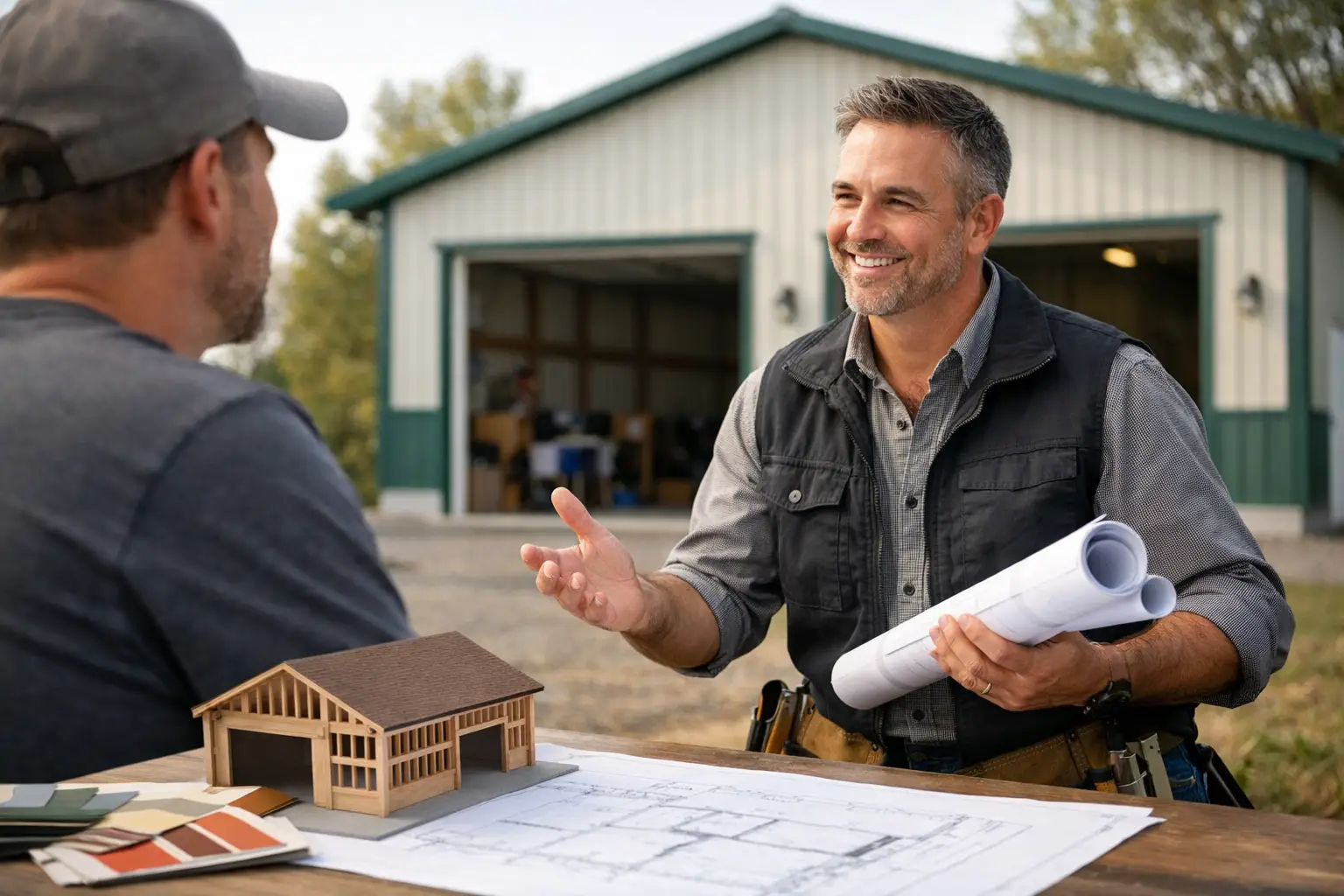
A garage project usually looks simple at first. Then the real decisions show up – width, depth, door size, roof style, slab timing, insulation, and whether you want a turnkey build or a kit. That is where the right post frame garage builder matters. You are not just hiring someone to put up a shell. You are choosing a partner who can help you define the building correctly before materials are ordered and construction begins.
For property owners in Oregon and Washington, that early planning stage has a direct impact on cost, usability, and long-term performance. A garage that is too short for a truck, too narrow for comfortable door swing, or missing the right overhang and ventilation details can become a daily frustration. A well-designed post-frame garage does the opposite. It works the way you need it to from day one.
What a post frame garage builder should actually help with
A qualified builder should do more than give you a square-foot price and a rough sketch. Garage projects vary more than many buyers expect. One customer needs basic vehicle storage. Another needs a shop space with higher sidewalls, interior liner panels, insulation, and large overhead doors for equipment. Someone else may want a garage that matches an existing home or barn.
A capable post frame garage builder should guide those decisions in a practical way. That includes asking how the building will be used now and a few years from now, how many vehicles or trailers you want under roof, whether you need workspace inside, and what type of access makes sense for your site. Those details shape the whole project.
This is also where post-frame construction has a real advantage. It offers flexible layouts, clear spans, and strong value for detached garages, hobby shops, RV storage, and mixed-use utility buildings. But flexibility only helps if the design is based on the way you actually plan to use the building.
Start with use, not just size
Many buyers begin by saying they want a 24×24 or 30×40 garage. That is a reasonable starting point, but it should not be the whole conversation. A builder with experience will ask what is going inside.
A two-car garage for daily drivers has different requirements than a building meant for a pickup, side-by-side, workbench, and parts storage. If you own larger vehicles, boat trailers, or farm equipment, door height and turning clearance become just as important as floor area. The same is true if you want attic trusses, a lean-to, or extra bays added later.
Good planning usually comes down to a few practical questions. How tall is your tallest vehicle? Do you need room to open doors without crowding the wall? Will you heat the building? Do you want finished interior walls at some point? Are you pouring concrete now or later? Those answers affect framing, spacing, openings, and the overall quote.
What to compare when choosing a builder
Not every garage provider approaches projects the same way. Some are general contractors who occasionally build post-frame structures. Others specialize in post-frame design and construction. That difference matters, especially when you are customizing a building for a specific site or use.
Look closely at how the builder handles design scoping. If the process feels vague, the price often is too. A reliable quote should be based on real project inputs, not broad assumptions. That means dimensions, door and window locations, roof style, overhangs, site access, and who is handling what part of the job.
It also helps to know whether the company offers more than one path to completion. Some buyers want full-service construction. Others already have a concrete contractor lined up or prefer to manage the project themselves. A builder who can support both constructed buildings and kits gives you more control over budget and scheduling.
Regional experience is another factor that should not be overlooked. Soil conditions, weather exposure, permitting expectations, and common use cases vary by area. A builder who regularly works in Oregon and Washington is more likely to ask the right questions upfront and recommend details that fit local conditions.
Design details that affect daily use
A garage is one of those buildings where small design choices can make a big difference. Door placement is a good example. Centered doors may look balanced from the road, but offset openings can improve circulation inside or create more useful wall space for shelving and benches.
Roof style matters too. A gable roof is common and practical, but it is not the only option. Depending on your site and the look you want, other rooflines may make sense. Overhangs can improve appearance and help with weather protection. Windows can bring in natural light, but they also reduce wall area for storage. There is no single right answer. It depends on how the building will be used.
Height is another common miss. Buyers sometimes focus on keeping costs down and choose a shorter sidewall, only to regret it later when they upgrade vehicles or want to add a lift, loft storage, or taller overhead door. Building a little more vertical clearance into the plan can be a smart long-term decision if the use supports it.
Kits versus full-service construction
This is one of the biggest decision points in any garage project. Some customers want a builder to handle design, materials, and construction from start to finish. Others are comfortable managing subcontractors or doing part of the work themselves.
Neither option is automatically better. It depends on your schedule, skill set, budget, and tolerance for coordination. A full-service build can save time and simplify the process. A kit can make sense if you have labor available, want more control, or already have trusted local help.
The key is clarity. You want to know exactly what is included, what is not, and where responsibilities start and end. If you are comparing a kit price to a constructed price, make sure you are comparing the same building scope. Missing items such as site prep, concrete, insulation, or upgraded doors can change the real cost quickly.
That is one reason many buyers prefer working with specialists such as Locke Buildings. When a company handles both built projects and kit packages, the conversation tends to be more grounded in actual project planning rather than one-size-fits-all pricing.
Red flags during the quote process
If you request a quote and get a number back without much discussion, that should raise questions. Post-frame garages are customizable structures, and accurate pricing depends on specific information. A fast estimate can be useful early on, but it should lead to a more detailed scope, not replace it.
Another red flag is weak communication around options. If a builder cannot clearly explain why one door configuration costs more, how roof changes affect materials, or what insulation path fits your use case, you may end up making expensive choices without enough guidance.
Pay attention to how the builder talks about trade-offs. Experienced contractors do not pretend every option is best for every customer. They explain where spending more adds value and where a simpler approach may be enough. That kind of practical guidance usually leads to a better finished building.
How to prepare before requesting a quote
You do not need a finished plan set before talking to a builder, but you should bring a clear starting point. Think through your intended use, preferred size range, approximate location on the property, and whether you want turnkey construction or a kit. If you already have sketches, inspiration photos, or site information, have those ready.
It also helps to identify your must-haves versus your nice-to-haves. Maybe the oversized RV door is essential, but the window package can wait. Maybe insulation is part of phase one, or maybe you just want the structure designed so it is easy to add later. That kind of prioritizing helps the builder shape a quote around real goals.
The more complete your information, the more useful the quote will be. That saves time and reduces the chance of revisions later.
The best builder helps you make better decisions
A good garage is not just a framed structure with doors on the front. It is a working building that should fit your vehicles, your site, and the way you live or work. The right builder brings order to that process. They ask the right questions, explain the trade-offs, and help you choose a path that fits your budget and build goals.
If you are talking with a post frame garage builder, look past the first price and pay attention to the planning behind it. A well-scoped project usually leads to fewer surprises, a better-performing building, and a garage that still makes sense years after it is finished.