You can tell a lot about a building quote by the questions that come before the number. A reliable pole barn quote process does not start with a random price per square foot. It starts with use, size, site conditions, and who is actually building the project. If those details are vague, the quote usually is too.
For property owners in Oregon and Washington, that matters. A horse barn, equipment shed, workshop, garage, or commercial post-frame building may all fall under the same broad category, but they do not quote the same way. Door openings, snow load needs, insulation plans, slab decisions, and site access can move pricing fast. The better the project is defined upfront, the more useful the quote becomes.
What the pole barn quote process is really meant to do
A good quote is not just there to give you a dollar figure. It is there to narrow down the right building for the job and show what is included, what is optional, and what still needs to be decided.
That matters because many buyers are not comparing identical projects. One quote may assume a kit only. Another may include labor, trim packages, upgraded doors, engineered plans, or delivery. One builder may be pricing a basic shell, while another is accounting for the building as it will actually be used. If you are storing hay, housing animals, parking RVs, or setting up a shop, those use cases affect structure and layout from the beginning.
A strong quote process helps prevent two expensive problems. The first is underquoting a project that will grow later through changes and add-ons. The second is overbuilding a structure because the intended use was not clearly discussed.
The information that shapes an accurate quote
The fastest way to improve quote accuracy is to give the right project details early. Size is one part of that, but it is never the only part.
Building use comes first
The intended use drives most of the early decisions. A storage building may need basic access and open floor space. A livestock barn may need ventilation, partitions, and durable interior planning. A workshop may require insulation, overhead doors, and a layout that supports equipment movement. A riding arena has a very different span and clearance requirement than a garage.
When the use is clear, it becomes easier to recommend practical dimensions, eave height, door placement, and structural options. Buyers often begin with a rough size in mind, then adjust once the use is discussed in more detail.
Dimensions and layout matter more than raw square footage
Two 40×60 buildings can price very differently. One might be a simple storage shell with a single sliding door. The other might need multiple overhead doors, windows, a lean-to, insulation, and upgraded interior access. Width, length, and height all affect material and engineering requirements, but layout choices often make the bigger difference in final price.
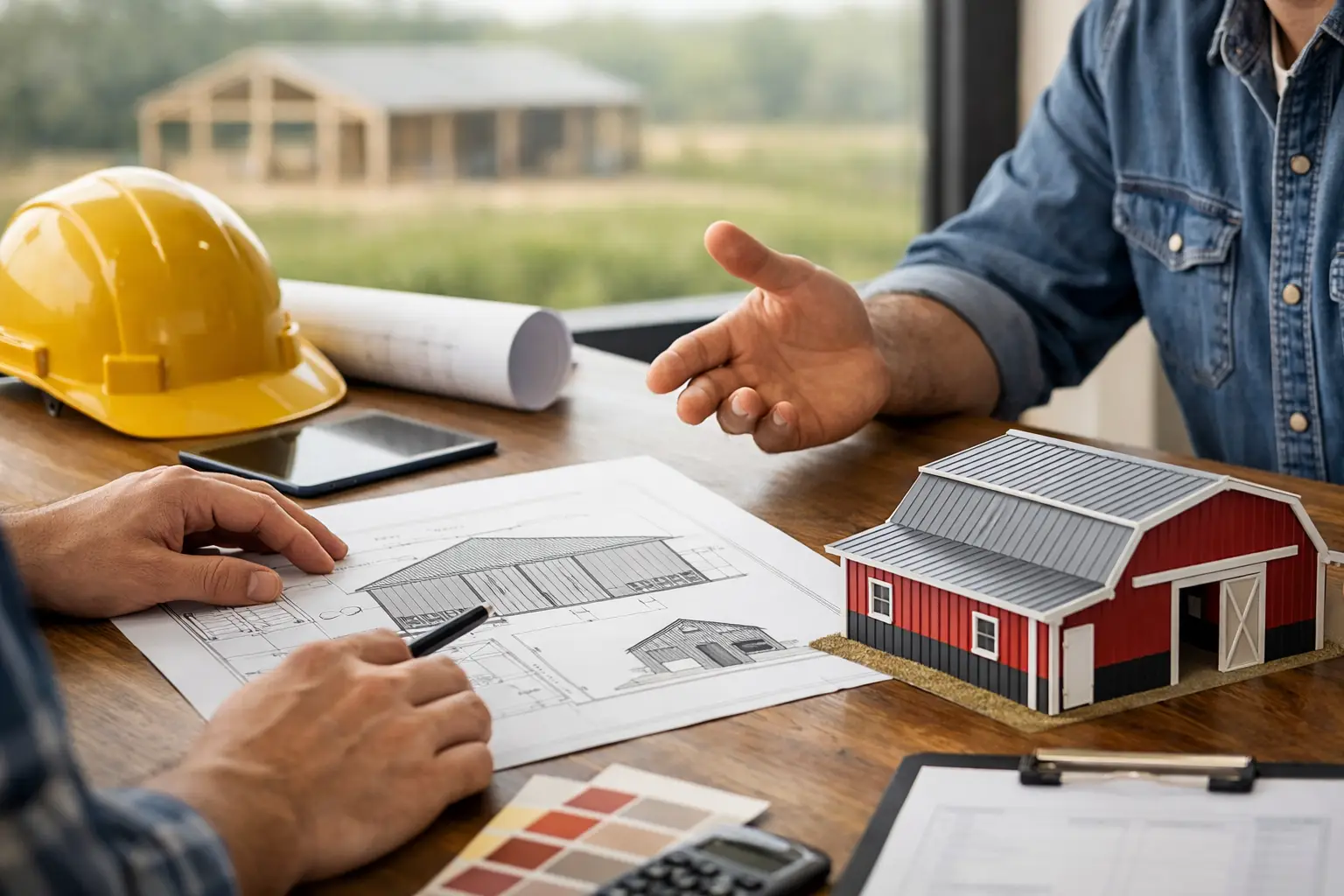
This is where a rough sketch, sample plan, or uploaded drawing can save time. It gives the quoting team a clearer picture of traffic flow, access needs, and any special features that should be included from the start.
Site conditions can change the number
Flat, open, accessible ground is easier to build on than a tight rural site with slope, soft soil, or limited truck access. Site prep, drainage, excavation, and foundation conditions may or may not be part of an initial quote, depending on how far along the project is. But they should be discussed early so expectations stay realistic.
In the Pacific Northwest, weather load requirements also matter. Wind and snow loads are not side notes. They are part of how the building is designed and priced.
Doors, windows, overhangs, and roof style all add up
Most pole buildings start simple on paper and become more customized once the owner starts thinking through daily use. That is normal. A garage door for tractors is not the same as a door for pickups. A barn that needs cross-ventilation will not be configured like enclosed storage. Overhangs, cupolas, wainscot, and roof style choices can improve function and appearance, but they also affect price.
The quote process should make room for those decisions instead of forcing a one-size-fits-all number.
How the quote process usually unfolds
The best quoting systems are practical, not complicated. Whether you start with a form, a design tool, or a direct conversation, the goal is to move from broad idea to defined scope.
Step one: project intake
This is where the basics are gathered. Typical starting details include building type, intended use, dimensions, location, and whether you want a material kit, a full construction package, or something in between.
That last point is important. Some customers want a turnkey contractor. Others plan to build themselves or use their own crew. The quote needs to match that path, because the pricing structure is different.
Step two: design clarification
After the first request, there is usually a follow-up stage where missing details get filled in. This may include roof pitch, door sizes, window placement, overhangs, insulation plans, interior clearances, and exterior preferences.
This is also the point where experienced guidance matters. Customers do not always know what dimensions or features make the most sense for their use case. A good quoting conversation helps correct issues before they become change orders.
Step three: scope alignment
Before pricing is finalized, the scope has to be aligned. Is the slab included or not? Are permits part of the proposal? Is engineering included? Is site work excluded? Is the quote for shell only, kit only, or complete construction?
This is where many quote comparisons fall apart. If one proposal includes labor and another does not, the lower number is not automatically the better deal. It may just be missing major pieces.
Step four: quote delivery and revisions
Once the project scope is clear, the quote can be prepared with more confidence. In many cases, there is still some back-and-forth. Buyers may want to compare building sizes, swap a sliding door for an overhead door, or price an upgraded roof style against a simpler option.
That is part of the process, not a problem. In fact, it is often the stage where the building gets better. A practical quote process lets you test options before you commit.
Why some quotes feel vague
A vague quote usually comes from vague inputs. If the request says only, “I need a barn,” the response can only be broad. That does not mean the contractor is avoiding specifics. It means the project has not been defined enough yet.
There is also a difference between a budget number and a build-ready proposal. Early-stage pricing can help with planning, but it should not be mistaken for a locked-in final cost. If engineering, site conditions, permit requirements, or custom features are still undecided, the quote should reflect that level of uncertainty.
For buyers, the key is to know what stage they are in. If you are still deciding between a 30×40 workshop and a 40×60 equipment building, a range may be more useful than a hard number. If your site, dimensions, and features are already defined, the quote should be tighter.
How to get a better quote the first time
The easiest way to improve the process is to show your homework. Even a basic list of needs helps: what the building will be used for, what needs to fit inside, where the doors should go, and whether you want a kit or a completed build.
Photos of the site, rough sketches, and inspiration images can also help if they support the actual use of the building. The goal is not to overcomplicate the request. It is to reduce guessing.
If you are unsure on size, think in terms of use instead of square footage. Ask yourself what needs to move through the building, how much vertical clearance is required, and whether the structure may need to serve future needs as well. Building slightly larger can make sense in some cases, but not always. It depends on budget, site, and how the space will really be used.
For customers comparing kit options versus full-service construction, it helps to be honest about labor, equipment, and schedule. Self-build projects can offer flexibility, but they also shift responsibility. A complete build costs more upfront, but it removes many coordination burdens. Neither option is automatically better. The right choice depends on your experience, timeline, and how involved you want to be.
At Locke Buildings, that practical side of the conversation is what makes the quote useful. The best number is not the fastest one. It is the one built around the project you are actually planning.
If you are ready to request pricing, bring the real details with you. A clear quote starts with a clear plan, even if that plan is still taking shape.