A pole barn that looks big enough on paper can feel tight the first week you start using it. The usual problem is not the building itself. It is that people try to size it around what they own today instead of how they will actually use it over the next ten to twenty years. If you are asking, what size pole barn do I need, the right answer starts with function first and dimensions second.
That matters because two buildings with the same square footage can perform very differently. A 30×40 barn with the wrong door placement or low sidewalls may be less useful than a 24×48 building with better access and clearance. Good sizing is not just about area. It is about workflow, turning space, storage habits, future equipment, and whether the building needs to support animals, vehicles, machinery, workbenches, or finished living space.
Start with use, not square footage
The fastest way to narrow down size is to define the building’s primary job. A personal garage, hay barn, horse setup, equipment shed, and commercial shop all need different layouts even when their footprint is similar.
For a simple residential garage or hobby shop, many owners start in the 24×24 to 30×40 range. That can work well for two to three vehicles, basic tool storage, and some bench space. But if you plan to keep a tractor, side-by-side, boat, or enclosed trailer inside, those common sizes fill up quickly.
For farm and ranch use, equipment width and height become the limiting factors. Implements, tractors with cabs, hay storage, and feed access all change the spacing you need between posts, doors, and interior zones. Equestrian buildings add another layer because stalls, tack rooms, wash racks, aisle widths, and trailer movement all require planning beyond just fitting a roof over the area.
If the building will serve more than one purpose, size for the dominant use and leave room for the second. A workshop that also stores RVs should be planned like an RV building first. A barn that also houses tools should be laid out around livestock flow first. That approach prevents the most expensive mistake, which is building a structure that technically fits everything but is frustrating to use.
What size pole barn do I need for common projects?
There is no single best size, but there are common starting points that help frame the discussion.
A 24×24 or 24×30 works for a modest garage, small equipment storage, or a compact shop. A 30×40 is one of the most flexible sizes for homeowners because it can support vehicle storage, workspace, and general property equipment. A 36×48 or 40×60 often makes sense when the building needs to handle larger machinery, multiple bays, livestock support space, or heavier workshop use.
Once you move into arena, commercial, or mixed-use agricultural projects, dimensions become much more custom. Riding arenas, for example, are often driven by the riding discipline and safe working dimensions rather than the owner’s budget alone. Commercial and barndominium projects are even more dependent on interior planning because office areas, living areas, bathrooms, and mechanical rooms all change the footprint quickly.
Those common sizes are useful reference points, not final answers. A building that is five feet wider or one bay longer may work much better for your property and your equipment.
Width, length, and height each solve a different problem
People often focus on square footage because it is easy to compare, but width, length, and height do separate jobs.
Width affects how many vehicles or equipment pieces can sit side by side, how much aisle space you have, and whether interior movement feels cramped. If you want to open truck doors comfortably, walk around equipment, or keep workbenches along the wall, extra width pays off fast.
Length usually controls storage volume and expansion room. If your use involves trailers, hay, long materials, multiple stalls, or dedicated work zones, additional length can be more valuable than additional width.
Height is the dimension people underestimate most. Sidewall height affects overhead doors, loft potential, equipment clearance, RV storage, and ventilation. If you think you might own a taller truck, tractor cab, car lift, or camper later, planning enough height now is much cheaper than trying to solve it later.
For many projects, the right question is not just what size pole barn do I need. It is what dimensions support the way I park, store, load, repair, and move through the building every day.
Doors and layout can change the size you need
Door placement and door type can make a building feel larger or smaller without changing the footprint. A structure with poorly placed overhead doors may force awkward backing and waste interior wall space. A larger sliding door or hydraulic door may improve access for agricultural use, but it also affects framing and usable wall sections.
Think about how you enter and exit. Do you need drive-through capability? Will you back trailers in, or pull through? Does livestock movement need to stay separate from equipment access? Will a workshop need pedestrian doors away from large overhead doors for safety and convenience?
Interior layout matters just as much. Shelving, feed storage, tack rooms, enclosed shops, and office corners all reduce open floor area. If those functions are part of the plan, count them from the beginning instead of assuming they will fit later.
A common mistake is sizing only for the footprint of the items being stored. In reality, you need circulation space around them. A tractor might fit through the door, but if you cannot turn it, service it, or park another implement beside it, the building is undersized in practice.
Plan for future growth, but do it realistically
It usually makes sense to build a little larger than your immediate need if the budget allows. Materials, labor mobilization, site work, and permitting are already part of the project. Adding useful square footage during the initial build is often more cost-effective than outgrowing the building and starting over.
That said, bigger is not always better. Oversizing a building without a clear use can increase cost, site demands, and long-term heating or maintenance expenses. The goal is not to buy the largest structure possible. The goal is to match the building to the way your property will function over time.
A practical approach is to ask what you are likely to add within five years. Another vehicle? A larger tractor? More hay storage? A dedicated workspace? If those changes are probable, size for them now. If they are only remote possibilities, focus on a layout that allows flexibility instead of adding unnecessary square footage.
Site conditions and local requirements affect sizing too
On rural properties in Oregon and Washington, building size is also shaped by the site itself. Setbacks, access routes, grade changes, drainage, and utility locations can all influence the footprint that makes sense. A building that works perfectly on one site may create problems on another if truck access is tight or the pad area becomes expensive to prepare.
Snow load, wind exposure, and intended occupancy also matter. The right size on paper still has to work structurally for your region and use case. If the building includes enclosed finished areas, specialized doors, insulation packages, or commercial functions, those details can influence proportions and design choices early in the process.
This is one reason experienced post-frame planning matters. A building should not just fit your equipment list. It should fit your property, your permitting path, and the way you intend to build, whether that means a full-service contractor or a building kit for your own crew.
How to decide with confidence
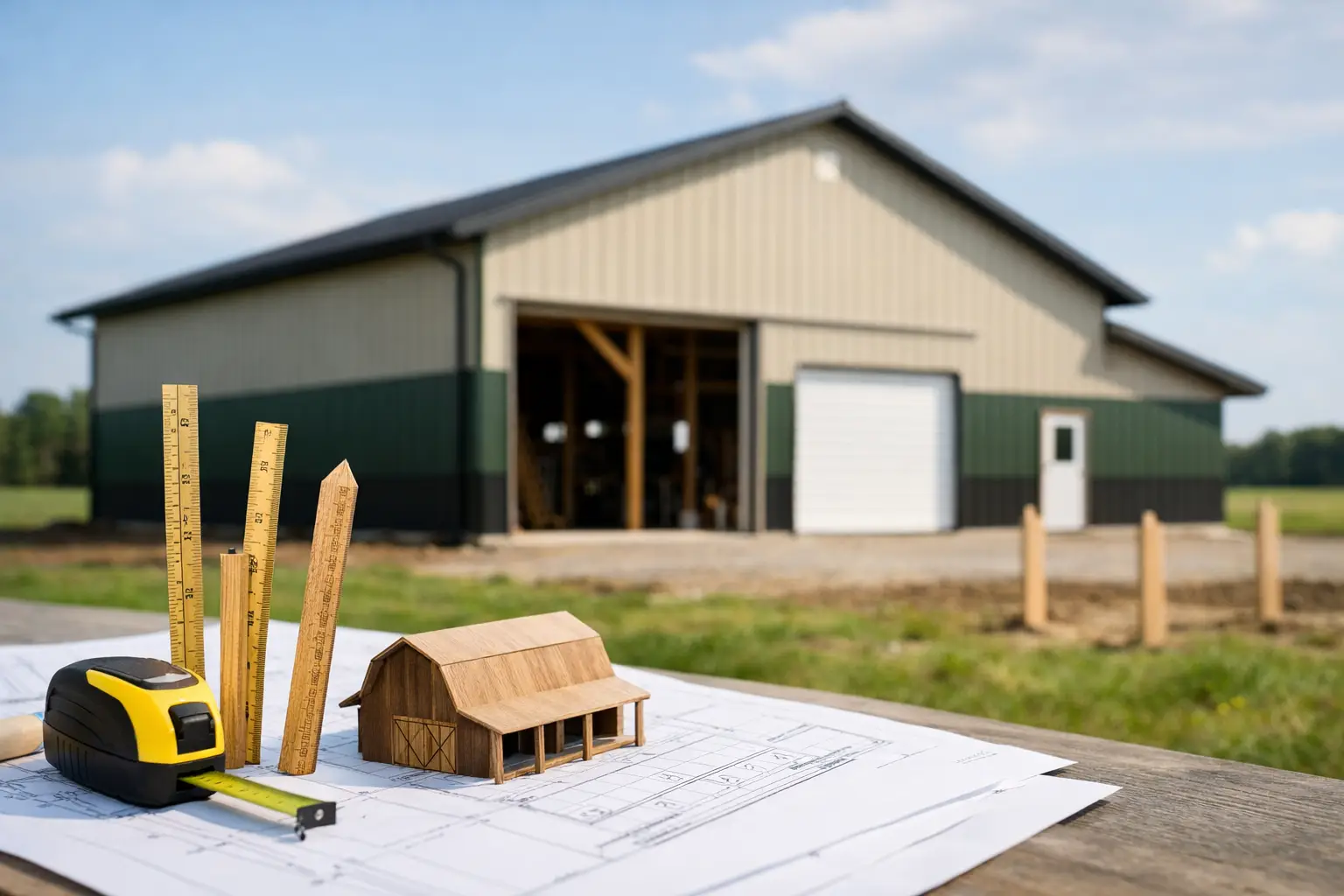
If you are stuck between two sizes, sketch the floor plan instead of comparing square footage alone. Draw the vehicles, stalls, workbenches, storage zones, and door swings to scale. Most sizing questions get clearer once you can see the circulation space.
Measure your tallest and widest equipment. Add room for opening doors, maintenance access, and future additions. Think about where snow, mud, feed, tools, and people will move throughout the year. That practical view usually leads to better decisions than guessing based on a neighbor’s building size.
It also helps to think in terms of frustrations you want to avoid. Not enough door height, not enough turnaround room, not enough covered storage, and not enough wall space are the complaints heard most often after a building goes up. They are easier to prevent during design than to fix later.
For buyers who want a realistic quote, the most useful starting information is simple: intended use, rough dimensions, preferred height, door sizes, roof style, and whether you want a kit or a built project. That gives a specialist enough to point you toward a practical range rather than a generic answer. At Locke Buildings, that kind of planning is where good projects start.
The right pole barn size is the one that works on your property, supports your daily use, and still makes sense years from now when your needs change a little. If you plan from the inside out, the dimensions usually become much easier to choose.